VOCABULARY / ENTRY
Human-Centered Design
human-centered-design
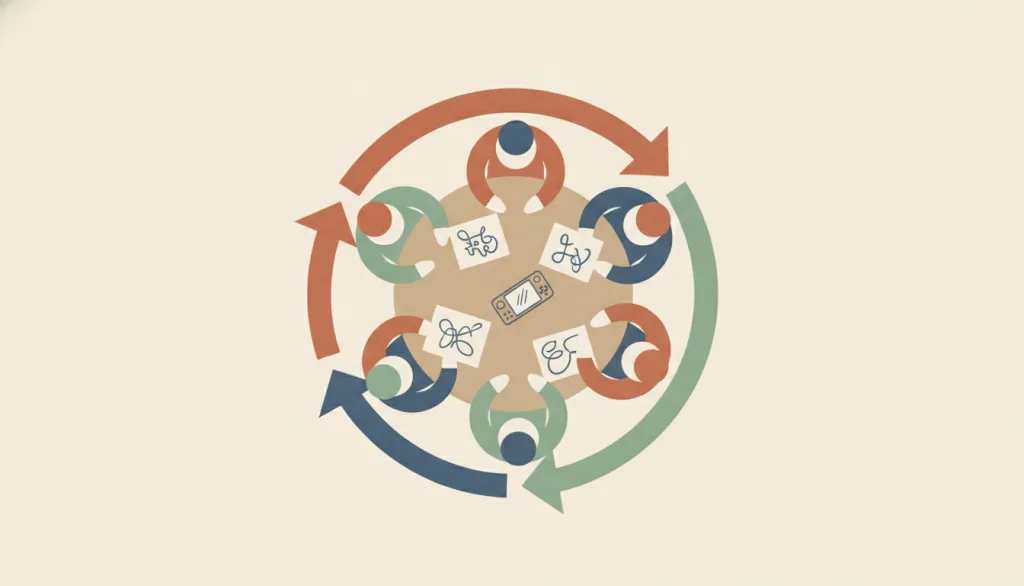
Put the people being served and their context at the center of the design process: understand their needs and the system they live in first, then experiment, evaluate, and revise repeatedly with prototypes and real users, rather than deciding on a solution and asking users to sign off afterwards.
Recognizing it
- Solutions grow out of direct observation and understanding of people and their context
- Low-cost prototypes are tried with users early
- Evaluation results feed the next round of changes
Concept boundary
Adjacent to inclusive design but broader: inclusive design focuses on recognizing exclusion and differences in ability, while human-centered design is the overall iterative approach organized around needs, context, and evaluation. It is also not a fixed procedure; Norman stresses that it is a set of principles and a mindset, not a checklist to complete.
When to consider it
- The problem is still unclear and the root problem needs to be identified first
- The people being served differ substantially from the team's own experience
- Real users can be reached for multiple rounds of trials
When to be cautious
- Treating interviews or usability tests as a one-off acceptance check before delivery
- Following individual users' stated preferences while ignoring the activity itself and the wider system
- Claiming to be human-centered without access to real users
Tradeoff
Repeated research and evaluation lengthen the cycle and add coordination cost; chasing individual users' immediate feedback can also sacrifice the coherence of the overall activity.
Conditional rules · Editorial advice
Related entries
Iterating only with typical users can still reproduce exclusion; inclusive design adds the lens of recognizing differences.
Direct observation of the context of use is the basis for judging whether an interruption is justified.
Making options and state visible is a common concrete fix during iteration.
Sources and what they support
Describes human-centered design as a creative, empathy-driven approach to problem solving with inspiration, ideation, and implementation phases, emphasizing prototypes and sharing work with the people being served.
Retrieved: 2026-09-15 · Snapshot unconfirmedNorman states that human-centered design is not about following processes but about staying mindful of people and the whole system and solving the right problems; the specific iteration rules here are editorial applications.
Retrieved: 2026-09-15Names "know your user" as the method's core principle and acknowledges its usability benefits, while criticizing that over-focusing on individual users can neglect the activity itself; supports this entry's tension and when_not items.
Retrieved: 2026-09-15 · Snapshot unconfirmedDefinitions reference these sources. Digital specimens, selection advice, relationships, and recipes are editorial work and have not been validated through user research.
Type extensions and implementation notes
No operable specimen yet; the illustration is editorial. When applied to a product, still verify that real users were reached, that iteration actually changed the design, and that evaluation records are traceable.
{
  "values": [
    "Understanding people and context",
    "Iterative learning",
    "Solving the right problem"
  ],
  "tension": "Following individual users versus serving the whole activity",
  "questions": [
    "Are we understanding real users, or the users the team imagines?",
    "What did this round of evaluation actually change?"
  ]
}
Full Agent entry JSON
{
  "id": "human-centered-design",
  "type": "philosophy",
  "name": {
    "zh": "以人为中心的设计",
    "en": "Human-Centered Design"
  },
  "aliases": [
    "HCD",
    "人本设计",
    "Human-Centred Design"
  ],
  "granularity": "experience",
  "intents": [
    "understand-users",
    "include-users"
  ],
  "tags": [
    "user research",
    "iteration",
    "prototyping",
    "context",
    "evaluation"
  ],
  "definition": "Put the people being served and their context at the center of the design process: understand their needs and the system they live in first, then experiment, evaluate, and revise repeatedly with prototypes and real users, rather than deciding on a solution and asking users to sign off afterwards.",
  "boundary": "Adjacent to inclusive design but broader: inclusive design focuses on recognizing exclusion and differences in ability, while human-centered design is the overall iterative approach organized around needs, context, and evaluation. It is also not a fixed procedure; Norman stresses that it is a set of principles and a mindset, not a checklist to complete.",
  "signature": [
    "Solutions grow out of direct observation and understanding of people and their context",
    "Low-cost prototypes are tried with users early",
    "Evaluation results feed the next round of changes"
  ],
  "when": [
    "The problem is still unclear and the root problem needs to be identified first",
    "The people being served differ substantially from the team's own experience",
    "Real users can be reached for multiple rounds of trials"
  ],
  "when_not": [
    "Treating interviews or usability tests as a one-off acceptance check before delivery",
    "Following individual users' stated preferences while ignoring the activity itself and the wider system",
    "Claiming to be human-centered without access to real users"
  ],
  "tradeoff": "Repeated research and evaluation lengthen the cycle and add coordination cost; chasing individual users' immediate feedback can also sacrifice the coherence of the overall activity.",
  "comparison": {
    "focus": "People's needs, context, and the whole system",
    "mechanism": "An iterative loop of understanding, prototyping, and evaluation",
    "cost": "Requires ongoing contact with users and multiple rounds of revision"
  },
  "sources": [
    {
      "id": "ideo-design-kit",
      "title": "IDEO.org · Design Kit: What is Human-Centered Design?",
      "url": "https://www.designkit.org/human-centered-design.html",
      "claim": "Describes human-centered design as a creative, empathy-driven approach to problem solving with inspiration, ideation, and implementation phases, emphasizing prototypes and sharing work with the people being served.",
      "checkedAt": "2026-09-15",
      "archive": {
        "lookupUrl": "https://web.archive.org/web/20260915*/https://www.designkit.org/human-centered-design.html",
        "status": "pending",
        "checkedAt": "2026-09-15T18:16:39.671Z",
        "error": "status-request-failed",
        "jobId": "spn2-4a767f10b2d8404b048f5b766a72069d3abf7dd2"
      }
    },
    {
      "id": "nng-norman-hcd-principles",
      "title": "NN/g · Principles of Human-Centered Design (Don Norman)",
      "url": "https://www.nngroup.com/videos/principles-human-centered-design-don-norman/",
      "claim": "Norman states that human-centered design is not about following processes but about staying mindful of people and the whole system and solving the right problems; the specific iteration rules here are editorial applications.",
      "checkedAt": "2026-09-15",
      "archive": {
        "lookupUrl": "https://web.archive.org/web/20260915*/https://www.nngroup.com/videos/principles-human-centered-design-don-norman/",
        "status": "available",
        "checkedAt": "2026-09-15T18:17:19.009Z",
        "jobId": "spn2-ef99a1ac210293e8296c11fa021d57304232c0f8",
        "url": "https://web.archive.org/web/20260915181743/https://www.nngroup.com/videos/principles-human-centered-design-don-norman/",
        "timestamp": "20260915181743"
      }
    },
    {
      "id": "jnd-hcd-considered-harmful",
      "title": "Don Norman · Human-Centered Design Considered Harmful",
      "url": "https://jnd.org/human-centered-design/",
      "claim": "Names \"know your user\" as the method's core principle and acknowledges its usability benefits, while criticizing that over-focusing on individual users can neglect the activity itself; supports this entry's tension and when_not items.",
      "checkedAt": "2026-09-15",
      "archive": {
        "lookupUrl": "https://web.archive.org/web/20260915*/https://jnd.org/human-centered-design/",
        "status": "unconfirmed",
        "checkedAt": "2026-09-15T18:17:22.991Z",
        "error": "status-request-failed",
        "jobId": "spn2-693fca976ff7210c94ed8b2b8c69f63e251a2e15"
      }
    }
  ],
  "relations": [
    {
      "target": "inclusive-design",
      "kind": "composes_with",
      "condition": "Choosing participants for research and evaluation",
      "reason": "Iterating only with typical users can still reproduce exclusion; inclusive design adds the lens of recognizing differences.",
      "basis": "editorial"
    },
    {
      "target": "calm-technology",
      "kind": "informs",
      "condition": "Deciding when information should enter the center of attention",
      "reason": "Direct observation of the context of use is the basis for judging whether an interruption is justified.",
      "basis": "editorial"
    },
    {
      "target": "recognition",
      "kind": "realized_by",
      "condition": "Evaluation shows users relying on memory to complete tasks",
      "reason": "Making options and state visible is a common concrete fix during iteration.",
      "basis": "editorial"
    }
  ],
  "rules": [
    {
      "when": "Starting to define the problem to solve",
      "instruction": "Observe and understand users in their real context before fixing the problem statement and solution.",
      "strength": "recommend",
      "basis": "editorial"
    },
    {
      "when": "Claiming a design is human-centered",
      "instruction": "Be able to say which users it was evaluated with and what changed as a result.",
      "strength": "must",
      "basis": "editorial"
    },
    {
      "when": "A user's immediate preference conflicts with their overall activity",
      "instruction": "Decide at the level of the activity and system rather than satisfying feedback item by item.",
      "strength": "recommend",
      "basis": "editorial"
    }
  ],
  "philosophy": {
    "values": [
      "Understanding people and context",
      "Iterative learning",
      "Solving the right problem"
    ],
    "tension": "Following individual users versus serving the whole activity",
    "questions": [
      "Are we understanding real users, or the users the team imagines?",
      "What did this round of evaluation actually change?"
    ]
  },
  "demo": null,
  "version": "0.1.0",
  "editorialStatus": "drafted",
  "requirements": [],
  "demoCapabilities": [],
  "implementationNote": "No operable specimen yet; the illustration is editorial. When applied to a product, still verify that real users were reached, that iteration actually changed the design, and that evaluation records are traceable.",
  "image": {
    "src": "/images/human-centered-design.webp",
    "alt": "A few abstract figures sit around a table with sketches and a prototype while arrows around them form an iteration loop."
  },
  "searchTerms": [
    "用户研究",
    "迭代",
    "原型",
    "情境",
    "评估"
  ]
}