EDITORIAL LIST / ONE LIST
2026 Trending Design Philosophies: Top 8 Design Ideas in 2026
8 entries · fewer than 10 seats; positions without verifiable evidence are left open
This edition records the design ideas this edition was following in 2026. It overlaps almost entirely with the classic foundation edition — an honest outcome rather than an unfinished list: these positions were still being discussed in 2026, and no new, verifiably grounded position displaced them.
Selection criteria
- A verifiable specification draft, institutional guidance, or methodological literature discussed it around 2026.
- It offers a concrete way of handling a current problem rather than restating a value.
- A new term with no grounding is not admitted merely to make the edition look fresh.
Seats in this edition
Positions marked “Editorially reconstructed seat” were filled by editorial judgement in this repository; every other seat comes from the list ledger in plan issue #1.
Human-Centered Design
Put the people being served and their context at the center of the design process: understand their needs and the system they live in first, then experiment, evaluate, and revise repeatedly with prototypes and real users, rather than deciding on a solution and asking users to sign off afterwards.
Why it is in this edition: Asked again in the annual context: when a system acts on its own, whose context stays at the centre.
Not to be confused with: Adjacent to inclusive design but broader: inclusive design focuses on recognizing exclusion and differences in ability, while human-centered design is the overall iterative approach organized around needs, context, and evaluation. It is also not a fixed procedure; Norman stresses that it is a set of principles and a mindset, not a checklist to complete.
Universal Design
A methodology proposed by Ron Mace and the NC State Center for Universal Design: products and environments should be designed to be usable by the widest possible range of people to the greatest extent, without the need for later adaptation or specialized design. This produced seven design principles (equitable use, flexibility in use, simple and intuitive use, perceptible information, tolerance for error, low physical effort, and size and space for approach and use) that guide how to reduce reliance on special accommodations.
Why it is in this edition: In the annual context it asks whether new interface shapes still reach the widest range of people.
Not to be confused with: Adjacent to inclusive design but different in method: universal design pursues a single mainstream solution that covers the widest possible range of people, while inclusive design accepts that different groups may need multiple tailored solutions, following a method of "solve for one, extend to many." Universal design is also not the same as accessibility compliance: accessibility focuses on people with disabilities and passing a compliance check, while universal design has a broader scope, emphasizing that as many people as possible can use a design directly from the design stage, rather than building a mainstream solution first and then patching it to meet compliance requirements.
Participatory Design
Let the people who will be affected by a design take part as co-designers in the design process and its key decisions, rather than only as subjects who are studied and then designed for by someone else; rooted in the Scandinavian workplace democracy and trade-union traditions of the 1960s-1970s.
Why it is in this edition: In the annual context it asks whether those affected took part in designing automated decisions.
Not to be confused with: Different from human-centered design: that approach puts users' needs and context at the center of the process, but the team still makes the final tradeoffs and decisions. Participatory design requires the affected people themselves to hold part of the decision-making power. Also different from inclusive design: inclusive design focuses on recognizing exclusion and differences in ability, while the key distinction here is who holds decision power, not which abilities are covered. If participants' input has no real effect on the outcome, inviting them to a meeting does not by itself make it participatory design.
Privacy by Design
Make privacy protection the default mode of operation for systems and business processes, embedded at design time rather than bolted on afterwards: if a person does nothing, their personal data stays protected; by default only the data necessary for the stated purpose is processed; and the purpose is explained at the point of collection and not extended beyond it.
Why it is in this edition: In the annual context it carries the constraint of not collecting and not sending on by default.
Not to be confused with: It is a philosophy that runs through the design process, not a checklist of consent banners or privacy switches; more toggles do not mean protected by default. It is also not the same as security: security is about keeping data from unauthorized access, while privacy by design also asks whether data should be collected at all, how much, and for what. Cavoukian explicitly treats "privacy versus security" as a false dichotomy to avoid; both should hold. It is related to but not identical with GDPR Article 25 "data protection by design and by default": that is a legal obligation on controllers, whereas this entry describes a design orientation.
Sustainable Design
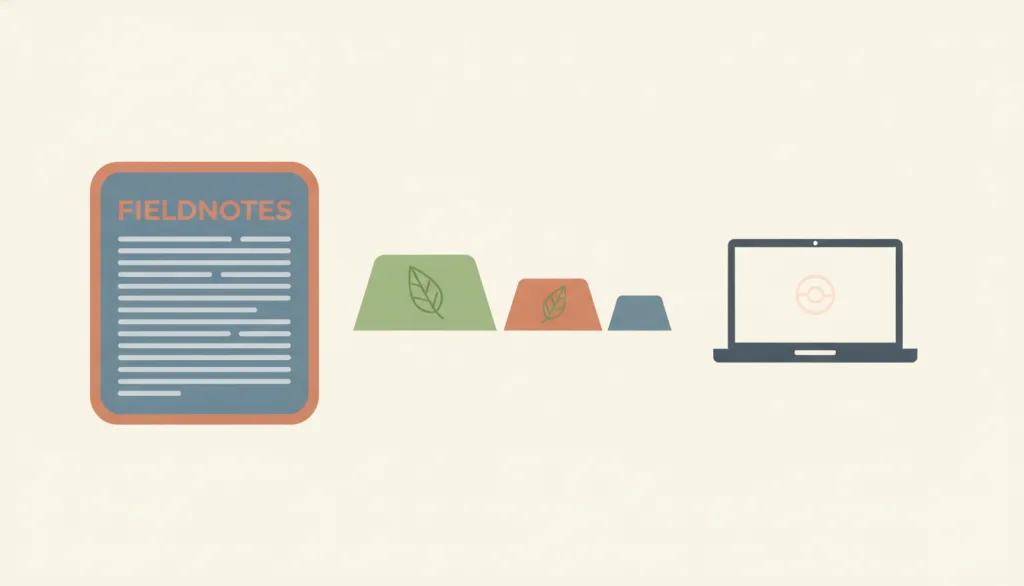
Deliberately reduce a digital product's demand on transferred bytes, compute, and devices across its life cycle, including the behavior the product encourages, instead of relying on device replacement to keep the experience working.
Why it is in this edition: In the annual context it addresses a marked rise in computation and transfer cost.
Not to be confused with: Not the same as calm technology: calm technology optimizes whether information interrupts attention, while sustainable design optimizes resource costs such as transferred bytes, compute, and device lifespan; the two can coexist but target different things. It is also not a generic sustainability slogan — every change should be backed by a measurement such as transferred bytes, and any energy or carbon figure must name the model it comes from rather than being presented as a precise measurement.
Value Sensitive Design
Value Sensitive Design is a method for systematically accounting for human values throughout the design process: through an iterative, integrative tripartite methodology of conceptual, empirical, and technical investigations, it first clarifies what values are at stake in a decision and whose values they are, and identifies indirect stakeholders who never use the product but are affected by it, in addition to direct users.
Why it is in this edition: In the annual context it supplies a way to put value conflicts on the table rather than defend them afterwards.
Not to be confused with: Value Sensitive Design is not a synonym for inclusive design: inclusive design focuses on recognizing exclusion and differences in ability, while Value Sensitive Design addresses the broader question of how human values (such as privacy, autonomy, and fairness) are supported or undermined for both direct and indirect stakeholders; the two can complement each other but have different focal points. It is also not a one-off ethics review done at the end of a project: the conceptual, empirical, and technical investigations must be revisited throughout the design process, not tacked on as a compliance check once a solution is already final.
Progressive Enhancement
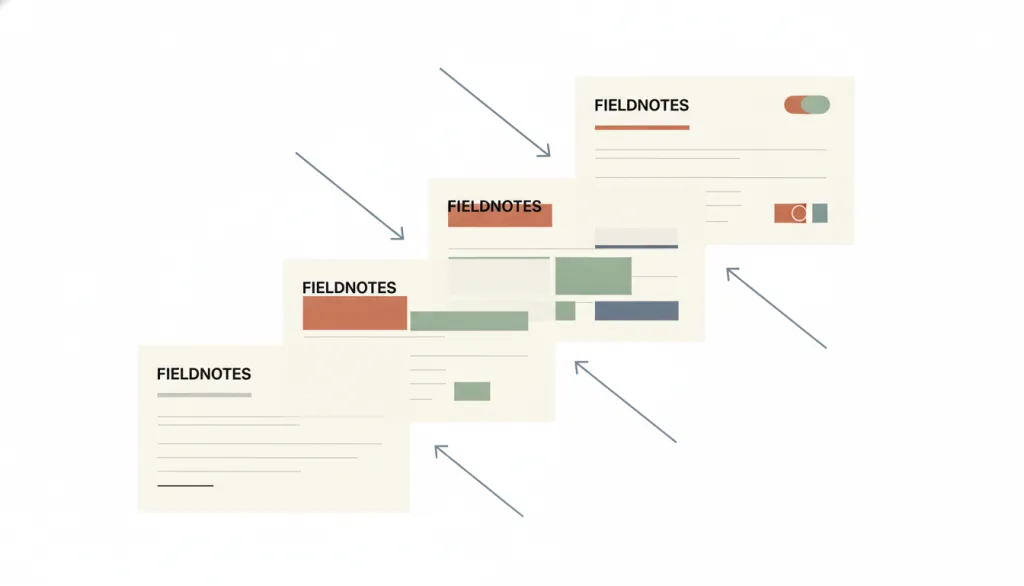
Start from the most basic capability: use semantic HTML so core content and the primary task (a working link or form) succeed under the most basic browser, device, and network conditions, then layer on styling and scripted enhancements as the environment actually supports them.
Why it is in this edition: In the annual context it corresponds to core content staying reachable when a feature is unavailable.
Not to be confused with: Progressive enhancement is about reach across environments and capabilities: whether the core function works under the most basic conditions, with richer layers added on top of that. This differs from progressive disclosure, which reveals information detail on demand and has nothing to do with device or scripting capability. It also differs from graceful degradation: graceful degradation starts from the most advanced experience and subtracts for older environments, while progressive enhancement starts from the most basic working version and adds. The two directions are opposite but can complement each other.
Systems Thinking
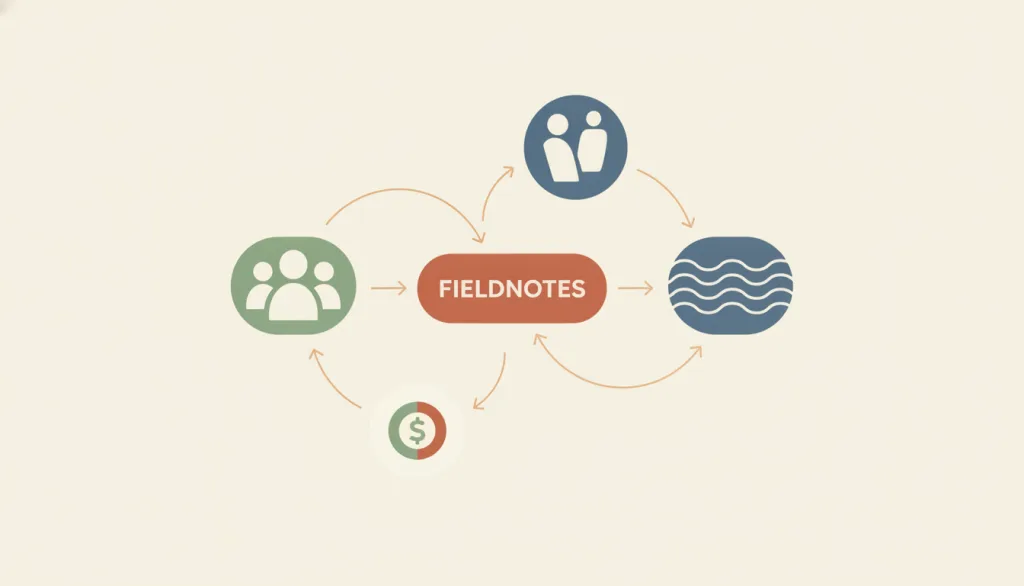
Treat a product as embedded in a larger system of people, incentives, and feedback loops rather than a set of isolated screens or features; before making a change, ask how it will ripple through the system's structure and feedback loops, not only what it does for the immediate task.
Why it is in this edition: In the annual context it explains why a single change produces consequences at a larger scale.
Not to be confused with: Systems thinking is not a design system (a component library and style guide) — the two names are easily confused in both Chinese and English, but they discuss entirely different things: a design system is about interface consistency, while systems thinking is about how a change will shift the people, incentives, and feedback structures a product sits inside. It is also not finished once a stakeholder map is drawn; it requires continuing to ask about downstream consequences, not a one-time mapping exercise.
How this pairs with the other edition
The heavy overlap with the classic foundation edition is itself this edition's finding: positions change far more slowly than visual or interaction practice.
Evidence scope
A specification draft is not a recommendation, and institutional guidance represents its publisher's position. Both show that discussion exists, not that practice has changed.