VOCABULARY / ENTRY
Similarity
similarity
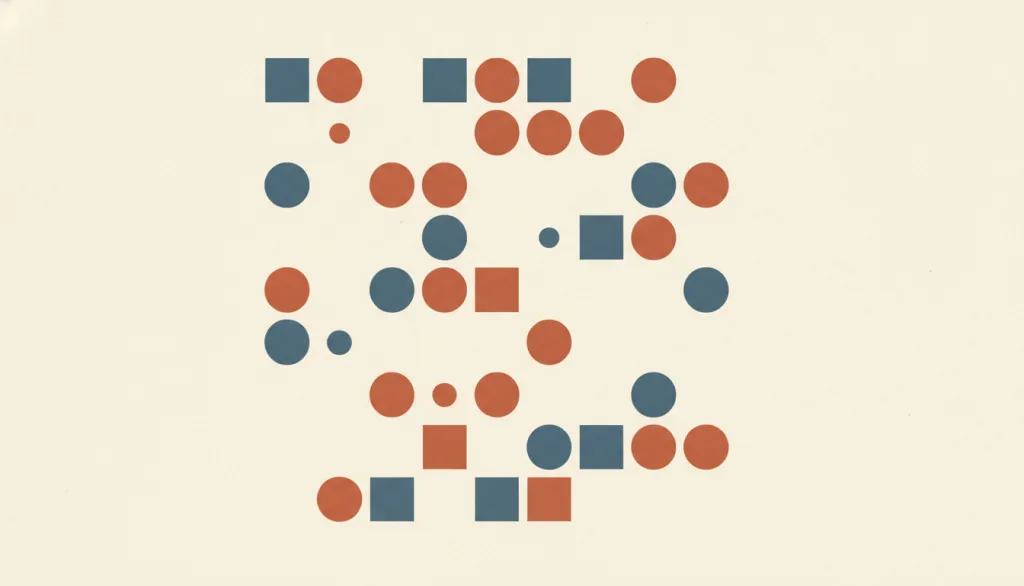
Elements that share visual characteristics such as color, shape, or size tend to be perceived as a related group, even when they are not positioned next to each other.
Recognizing it
- Elements of the same kind share color, shape, or size
- Elements of different kinds differ clearly in at least one attribute
- An element that breaks the similarity becomes a focal point
Concept boundary
Similarity groups by visual attributes, not by distance. It is often overpowered by proximity or common region, and it does not replace semantic labels, headings, or accessible grouping information.
When to consider it
- Actions or content of the same kind are spread across locations and need a cross-region relationship
- Links, buttons, tags, or other same-function elements should be recognizable at a glance
- A single key action needs emphasis through deliberate difference
When to be cautious
- Using the same styling to suggest a functional relationship that does not exist
- Applying the interactive color to non-interactive decorative elements
- Distinguishing groups by color alone without a second cue such as shape or text
Tradeoff
Visual consistency conveys relationships across locations, but excessive similarity makes unrelated elements read as one group and weakens elements that need emphasis.
Conditional rules · Editorial advice
Related entries
Proximity relies on distance while similarity relies on shared attributes; when they conflict, distance usually wins, so the cues should agree.
Consistent text styling lets same-level content be recognized across pages.
Color similarity can fail for people with color vision differences and needs a shape or text backup.
Sources and what they support
Elements sharing visual characteristics are perceived as more related; color, shape, and size are the main similarity cues, and similarity is often overpowered by proximity or common region.
Retrieved: 2026-09-15Elements that share superficial characteristics (shape, color, size) are perceived as grouped; similarity can be deliberately broken to emphasize a call to action.
Retrieved: 2026-09-15 · Snapshot unconfirmedSimilarity characteristics include color, shape, size, and texture; dissimilarity can serve as a focal point for emphasis.
Retrieved: 2026-09-15Definitions reference these sources. Digital specimens, selection advice, relationships, and recipes are editorial work and have not been validated through user research.
Type extensions and implementation notes
This entry has no interactive specimen yet; the illustration is an editorial sketch, and product use still requires verifying semantic grouping and accessibility annotations.
{
  "evidenceType": "A design interpretation of a perceptual principle",
  "limit": "This entry does not measure the grouping strength of each attribute or prescribe specific color or size values."
}
Full Agent entry JSON
{
  "id": "similarity",
  "type": "principle",
  "name": {
    "zh": "相似律",
    "en": "Similarity"
  },
  "aliases": [
    "Gestalt Similarity",
    "Law of Similarity",
    "相似原则",
    "相似性原则"
  ],
  "granularity": "component",
  "intents": [
    "organize-content",
    "reduce-complexity"
  ],
  "tags": [
    "grouping",
    "visual attributes",
    "Gestalt",
    "consistency",
    "visual relationships"
  ],
  "definition": "Elements that share visual characteristics such as color, shape, or size tend to be perceived as a related group, even when they are not positioned next to each other.",
  "boundary": "Similarity groups by visual attributes, not by distance. It is often overpowered by proximity or common region, and it does not replace semantic labels, headings, or accessible grouping information.",
  "signature": [
    "Elements of the same kind share color, shape, or size",
    "Elements of different kinds differ clearly in at least one attribute",
    "An element that breaks the similarity becomes a focal point"
  ],
  "when": [
    "Actions or content of the same kind are spread across locations and need a cross-region relationship",
    "Links, buttons, tags, or other same-function elements should be recognizable at a glance",
    "A single key action needs emphasis through deliberate difference"
  ],
  "when_not": [
    "Using the same styling to suggest a functional relationship that does not exist",
    "Applying the interactive color to non-interactive decorative elements",
    "Distinguishing groups by color alone without a second cue such as shape or text"
  ],
  "tradeoff": "Visual consistency conveys relationships across locations, but excessive similarity makes unrelated elements read as one group and weakens elements that need emphasis.",
  "comparison": {
    "focus": "Which elements belong to the same function or category",
    "mechanism": "Shared visual attributes influence perceived grouping",
    "cost": "Requires a consistently maintained attribute system and backup cues for color"
  },
  "sources": [
    {
      "id": "nng-similarity",
      "title": "NN/g · Similarity Principle in Visual Design",
      "url": "https://www.nngroup.com/articles/gestalt-similarity/",
      "claim": "Elements sharing visual characteristics are perceived as more related; color, shape, and size are the main similarity cues, and similarity is often overpowered by proximity or common region.",
      "checkedAt": "2026-09-15",
      "archive": {
        "lookupUrl": "https://web.archive.org/web/20260915*/https://www.nngroup.com/articles/gestalt-similarity/",
        "status": "available",
        "checkedAt": "2026-09-15T18:16:37.904Z",
        "jobId": "spn2-86531ce9f6d3d10485b70771380897121c6bc99c",
        "url": "https://web.archive.org/web/20260915181904/https://www.nngroup.com/articles/gestalt-similarity/",
        "timestamp": "20260915181904"
      }
    },
    {
      "id": "ixdf-gestalt",
      "title": "IxDF · What are the Gestalt Principles?",
      "url": "https://ixdf.org/literature/topics/gestalt-principles",
      "claim": "Elements that share superficial characteristics (shape, color, size) are perceived as grouped; similarity can be deliberately broken to emphasize a call to action.",
      "checkedAt": "2026-09-15",
      "archive": {
        "lookupUrl": "https://web.archive.org/web/20260915*/https://ixdf.org/literature/topics/gestalt-principles",
        "status": "unconfirmed",
        "checkedAt": "2026-09-15T18:06:59.312Z",
        "error": "status-request-failed",
        "jobId": "spn2-73fe8a649c9ddc92338f9f7177e4ee0255676b89"
      }
    },
    {
      "id": "smashing-gestalt",
      "title": "Smashing Magazine · Design Principles: Visual Perception And The Principles Of Gestalt",
      "url": "https://www.smashingmagazine.com/2014/03/design-principles-visual-perception-and-the-principles-of-gestalt/",
      "claim": "Similarity characteristics include color, shape, size, and texture; dissimilarity can serve as a focal point for emphasis.",
      "checkedAt": "2026-09-15",
      "archive": {
        "lookupUrl": "https://web.archive.org/web/20260915*/https://www.smashingmagazine.com/2014/03/design-principles-visual-perception-and-the-principles-of-gestalt/",
        "status": "available",
        "checkedAt": "2026-09-15T18:07:23.177Z",
        "jobId": "spn2-6a63687ff50fcbb4c132638ee0b4c05237b75c63",
        "url": "https://web.archive.org/web/20260915180846/https://www.smashingmagazine.com/2014/03/design-principles-visual-perception-and-the-principles-of-gestalt/",
        "timestamp": "20260915180846"
      }
    }
  ],
  "relations": [
    {
      "target": "proximity",
      "kind": "related",
      "condition": "Using both distance and visual attributes to express grouping",
      "reason": "Proximity relies on distance while similarity relies on shared attributes; when they conflict, distance usually wins, so the cues should agree.",
      "basis": "editorial"
    },
    {
      "target": "swiss",
      "kind": "composes_with",
      "condition": "A typographic system uses consistent sizes and colors to express hierarchy",
      "reason": "Consistent text styling lets same-level content be recognized across pages.",
      "basis": "editorial"
    },
    {
      "target": "inclusive-design",
      "kind": "informs",
      "condition": "Grouping cues depend on color",
      "reason": "Color similarity can fail for people with color vision differences and needs a shape or text backup.",
      "basis": "editorial"
    }
  ],
  "rules": [
    {
      "when": "Using color to express grouping or interactivity",
      "instruction": "Do not rely on color alone; provide a second cue such as shape, an icon, or text.",
      "strength": "must",
      "basis": "editorial"
    },
    {
      "when": "Defining styles for elements with the same function",
      "instruction": "Give them consistent visual attributes, and avoid reusing that style for elements with a different function.",
      "strength": "recommend",
      "basis": "editorial"
    }
  ],
  "principle": {
    "evidenceType": "A design interpretation of a perceptual principle",
    "limit": "This entry does not measure the grouping strength of each attribute or prescribe specific color or size values."
  },
  "demo": null,
  "version": "0.1.0",
  "editorialStatus": "drafted",
  "requirements": [],
  "demoCapabilities": [],
  "implementationNote": "This entry has no interactive specimen yet; the illustration is an editorial sketch, and product use still requires verifying semantic grouping and accessibility annotations.",
  "image": {
    "src": "/images/similarity.webp",
    "alt": "An evenly spaced grid of circles and squares where elements of the same color or shape read as a group even though they are not adjacent."
  },
  "searchTerms": [
    "分组",
    "视觉属性",
    "格式塔",
    "一致性",
    "视觉关系"
  ]
}