VOCABULARY / ENTRY
Cognitive Load
cognitive-load
Cognitive load is the total mental effort a task places on working memory. Intrinsic load comes from the complexity inherent to the task itself; extraneous load comes from how the interface presents that task. Design can mainly reduce the extraneous part.
Recognizing it
- Context needed across steps is carried by the interface rather than the user's memory
- Visual and verbal presentation stays consistent and restrained, cutting processing unrelated to understanding the task
- Unnecessary clutter and choices are removed before the task itself is simplified
Concept boundary
Cognitive load is a general concept of mental effort, not a synonym for recognition rather than recall — the latter is one concrete mechanism for lowering load (specifically the memory-retrieval part), not the concept itself. This entry also does not treat "7±2" as a design rule for menu length or similar option counts: that number describes short-term memory's capacity for unrelated recalled items, while menus and similar choices rely on recognition rather than recall, so the number cannot be applied directly as a cap on option count.
When to consider it
- A task requires the user to remember earlier input or state across multiple steps
- The interface has decorative typography, redundant links, or inconsistent wording unrelated to understanding the task
- Assessing why a flow feels effortful even though each individual step looks simple
When to be cautious
- Reducing cognitive load to "fewer options is always better," cutting features without distinguishing intrinsic from extraneous load
- Citing "7±2" as a hard cap on the number of menu items or list entries
- Judging a design's load by intuition alone instead of verifying it with task performance
- Hiding information the current task genuinely needs in the name of looking simple, and asking users to recall it instead
Tradeoff
Reducing extraneous load usually means the interface must carry more state and display cost — retaining input history, redisplaying information, or providing defaults. That takes interface space and development effort, but frees the user's mental resources for the task itself.
Conditional rules · Editorial advice
Related entries
Making options visible so people recognize rather than recall is one concrete mechanism for lowering this part of extraneous load — it is not cognitive load itself.
Inconsistent naming and styling force users to repeatedly judge whether something refers to the same thing, which is a removable source of extraneous load; consistency reduces that judgment burden at the source.
Revealing secondary information on demand can reduce the extraneous load of presenting everything at once, without cutting the task itself.
Sources and what they support
Cognitive load is the amount of mental resources required to operate a system; it splits into unavoidable intrinsic load (absorbing new information, tracking one's own goals) and extraneous load that should be minimized (visual clutter that doesn't help understand content); recommends reducing visual clutter, building on existing mental models, and offloading tasks by displaying information or providing defaults instead of relying on user memory.
Retrieved: 2026-09-15 · Archived 2026-09-10Working memory has limited capacity, like an egg carton with few slots; users forget information mid-task not from carelessness but because the interface demands more mental resources than the brain can supply; interfaces should provide external memory (comparison tables, shopping carts, note-taking features) so users can explicitly save and retrieve task information instead of relying entirely on internal recall.
Retrieved: 2026-09-15 · Archived 2026-09-06Short-term memory holds only about 7 chunks of information and these fade within about 20 seconds — but this is the source of a common misconception: limited short-term memory does not mean menus should be limited to 7 items either, because users don't need to memorize the full menu list; menus rely on recognition, not recall.
Retrieved: 2026-09-15 · Archived 2026-09-10Definitions reference these sources. Digital specimens, selection advice, relationships, and recipes are editorial work and have not been validated through user research.
Type extensions and implementation notes
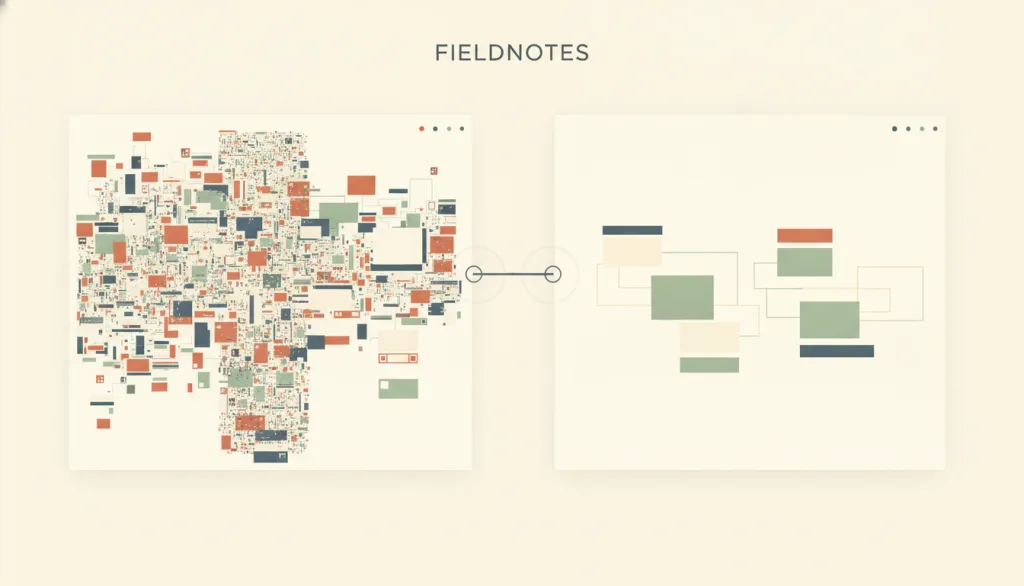
This entry has no interactive specimen yet; the illustration is an editorial sketch. Product use still requires verifying which information genuinely needs continuous display by the interface, which load is an unavoidable part of the task itself, and whether any simplification was validated with real task performance rather than intuition.
{
  "evidenceType": "A design interpretation of cognitive-psychology working-memory research and usability literature",
  "limit": "This entry does not measure the cognitive load of any specific interface, nor does it prescribe a universal cap on the number of options, words, or steps; capacity figures such as \"7±2\" describe recall tasks and cannot be translated directly into a count limit for interface design."
}
Full Agent entry JSON
{
  "id": "cognitive-load",
  "type": "principle",
  "name": {
    "zh": "认知负荷",
    "en": "Cognitive Load"
  },
  "aliases": [
    "Cognitive Load Theory",
    "心智负荷",
    "认知负担"
  ],
  "granularity": "experience",
  "intents": [
    "reduce-complexity",
    "organize-content"
  ],
  "tags": [
    "working memory",
    "cognition",
    "intrinsic load",
    "extraneous load",
    "simplification"
  ],
  "definition": "Cognitive load is the total mental effort a task places on working memory. Intrinsic load comes from the complexity inherent to the task itself; extraneous load comes from how the interface presents that task. Design can mainly reduce the extraneous part.",
  "boundary": "Cognitive load is a general concept of mental effort, not a synonym for recognition rather than recall — the latter is one concrete mechanism for lowering load (specifically the memory-retrieval part), not the concept itself. This entry also does not treat \"7±2\" as a design rule for menu length or similar option counts: that number describes short-term memory's capacity for unrelated recalled items, while menus and similar choices rely on recognition rather than recall, so the number cannot be applied directly as a cap on option count.",
  "signature": [
    "Context needed across steps is carried by the interface rather than the user's memory",
    "Visual and verbal presentation stays consistent and restrained, cutting processing unrelated to understanding the task",
    "Unnecessary clutter and choices are removed before the task itself is simplified"
  ],
  "when": [
    "A task requires the user to remember earlier input or state across multiple steps",
    "The interface has decorative typography, redundant links, or inconsistent wording unrelated to understanding the task",
    "Assessing why a flow feels effortful even though each individual step looks simple"
  ],
  "when_not": [
    "Reducing cognitive load to \"fewer options is always better,\" cutting features without distinguishing intrinsic from extraneous load",
    "Citing \"7±2\" as a hard cap on the number of menu items or list entries",
    "Judging a design's load by intuition alone instead of verifying it with task performance",
    "Hiding information the current task genuinely needs in the name of looking simple, and asking users to recall it instead"
  ],
  "tradeoff": "Reducing extraneous load usually means the interface must carry more state and display cost — retaining input history, redisplaying information, or providing defaults. That takes interface space and development effort, but frees the user's mental resources for the task itself.",
  "comparison": {
    "focus": "How much mental effort working memory bears to complete a task, and how much of that comes from the task itself versus how it is presented",
    "mechanism": "Distinguish the task's inherent intrinsic load from the presentation's extraneous load, and prioritize cutting the latter; substitute external memory (interface state) for internal memory",
    "cost": "The implementation cost of having the interface carry memory and display duties, and the task-performance testing needed to verify load is actually reduced"
  },
  "sources": [
    {
      "id": "nng-minimize-cognitive-load",
      "title": "NN/g · Minimize Cognitive Load to Maximize Usability",
      "url": "https://www.nngroup.com/articles/minimize-cognitive-load/",
      "claim": "Cognitive load is the amount of mental resources required to operate a system; it splits into unavoidable intrinsic load (absorbing new information, tracking one's own goals) and extraneous load that should be minimized (visual clutter that doesn't help understand content); recommends reducing visual clutter, building on existing mental models, and offloading tasks by displaying information or providing defaults instead of relying on user memory.",
      "checkedAt": "2026-09-15",
      "archive": {
        "lookupUrl": "https://web.archive.org/web/20260915*/https://www.nngroup.com/articles/minimize-cognitive-load/",
        "status": "available",
        "checkedAt": "2026-09-16T04:10:00.000Z",
        "url": "https://web.archive.org/web/20260910023655/https://www.nngroup.com/articles/minimize-cognitive-load/",
        "timestamp": "20260910023655"
      }
    },
    {
      "id": "nng-working-memory-external-memory",
      "title": "NN/g · Working Memory and External Memory",
      "url": "https://www.nngroup.com/articles/working-memory-external-memory/",
      "claim": "Working memory has limited capacity, like an egg carton with few slots; users forget information mid-task not from carelessness but because the interface demands more mental resources than the brain can supply; interfaces should provide external memory (comparison tables, shopping carts, note-taking features) so users can explicitly save and retrieve task information instead of relying entirely on internal recall.",
      "checkedAt": "2026-09-15",
      "archive": {
        "lookupUrl": "https://web.archive.org/web/20260915*/https://www.nngroup.com/articles/working-memory-external-memory/",
        "status": "available",
        "checkedAt": "2026-09-16T04:10:00.000Z",
        "url": "https://web.archive.org/web/20260906075914/https://www.nngroup.com/articles/working-memory-external-memory/",
        "timestamp": "20260906075914"
      }
    },
    {
      "id": "nng-short-term-memory-and-web-usability",
      "title": "NN/g · Short-Term Memory and Web Usability",
      "url": "https://www.nngroup.com/articles/short-term-memory-and-web-usability/",
      "claim": "Short-term memory holds only about 7 chunks of information and these fade within about 20 seconds — but this is the source of a common misconception: limited short-term memory does not mean menus should be limited to 7 items either, because users don't need to memorize the full menu list; menus rely on recognition, not recall.",
      "checkedAt": "2026-09-15",
      "archive": {
        "lookupUrl": "https://web.archive.org/web/20260915*/https://www.nngroup.com/articles/short-term-memory-and-web-usability/",
        "status": "available",
        "checkedAt": "2026-09-16T04:10:00.000Z",
        "url": "https://web.archive.org/web/20260910194235/https://www.nngroup.com/articles/short-term-memory-and-web-usability/",
        "timestamp": "20260910194235"
      }
    }
  ],
  "relations": [
    {
      "target": "recognition",
      "kind": "realized_by",
      "condition": "Load mainly comes from users needing to retrieve options or action names from memory",
      "reason": "Making options visible so people recognize rather than recall is one concrete mechanism for lowering this part of extraneous load — it is not cognitive load itself.",
      "basis": "editorial"
    },
    {
      "target": "consistency",
      "kind": "composes_with",
      "condition": "The same meaning appears with different wording or styling in different places in the interface",
      "reason": "Inconsistent naming and styling force users to repeatedly judge whether something refers to the same thing, which is a removable source of extraneous load; consistency reduces that judgment burden at the source.",
      "basis": "editorial"
    },
    {
      "target": "progressive-disclosure",
      "kind": "realized_by",
      "condition": "A task involves many options or a lot of information, but most of it is not required for the current step",
      "reason": "Revealing secondary information on demand can reduce the extraneous load of presenting everything at once, without cutting the task itself.",
      "basis": "editorial"
    }
  ],
  "rules": [
    {
      "when": "A task spans multiple steps and later steps depend on information produced by earlier ones",
      "instruction": "Have the interface store and redisplay that information when needed; do not require users to carry it between steps from memory.",
      "strength": "must",
      "basis": "editorial"
    },
    {
      "when": "An interface is judged to \"feel effortful\"",
      "instruction": "First check for and remove sources of extraneous load — visual clutter, inconsistent wording, unnecessary choices — before considering whether the task itself needs simplifying.",
      "strength": "recommend",
      "basis": "editorial"
    },
    {
      "when": "Deciding whether a list, menu, or form is \"too demanding\"",
      "instruction": "Measure with actual task performance (completion time, error rate, abandonment) rather than assuming some specific number of options is safe.",
      "strength": "recommend",
      "basis": "editorial"
    }
  ],
  "principle": {
    "evidenceType": "A design interpretation of cognitive-psychology working-memory research and usability literature",
    "limit": "This entry does not measure the cognitive load of any specific interface, nor does it prescribe a universal cap on the number of options, words, or steps; capacity figures such as \"7±2\" describe recall tasks and cannot be translated directly into a count limit for interface design."
  },
  "demo": null,
  "version": "0.1.0",
  "editorialStatus": "drafted",
  "requirements": [],
  "demoCapabilities": [],
  "implementationNote": "This entry has no interactive specimen yet; the illustration is an editorial sketch. Product use still requires verifying which information genuinely needs continuous display by the interface, which load is an unavoidable part of the task itself, and whether any simplification was validated with real task performance rather than intuition.",
  "image": {
    "src": "/images/cognitive-load.webp",
    "alt": "A fictional FIELDNOTES interface comparison: the left half is crowded with competing blocks of information, the right half keeps only a few clearly grouped modules, with a faint balance-scale motif suggested between them."
  },
  "searchTerms": [
    "工作记忆",
    "认知",
    "内在负荷",
    "外在负荷",
    "简化"
  ]
}