VOCABULARY / ENTRY
Splash (Launch) Screen
splash-screen
A full-screen frame shown while an app is opening and its interface is not ready yet: usually just a mark on a solid ground, accepting no input, and disappearing on its own once the interface is ready.
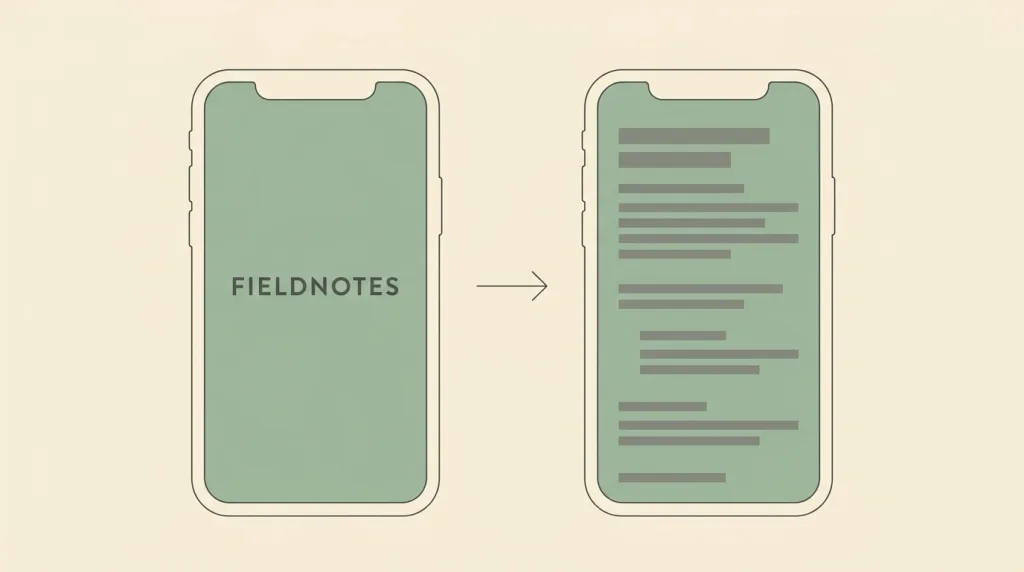
Recognizing it
- Fills the screen with nothing but a mark on a solid ground
- Accepts no input and contains nothing focusable
- Disappears by itself once the interface is ready, with no action required
Concept boundary
A splash screen is a transitional frame during loading, not a page: it carries no information, takes no taps, and should not be used to show advertising, announcements, or onboarding. Unlike a cover page, which is a real operable page; and unlike an indeterminate progress indicator, which can appear during any wait, a splash screen appears only at the moment an app launches. Deliberately extending it "to show the brand" converts the user’s waiting into exposure time, and this entry does not recommend it.
When to consider it
- The app genuinely needs perceptible time to prepare its interface
- The platform itself prescribes the first frame through a launch-screen mechanism
- The first frame should match the app’s own background color to avoid a white flash
When to be cautious
- Launch is nearly instant, where an extra frame only makes opening feel slower
- The splash screen is used as an ad slot, an announcement, or the first step of onboarding
- Its display is deliberately extended to increase brand exposure
Tradeoff
It turns an unavoidable wait into a deliberate frame instead of a blank flash, at the cost of taking time itself — time during which the user can do nothing.
Conditional rules · Editorial advice
Related entries
An indeterminate progress indicator can appear in any wait and says work is still going on, while a splash screen covers only the launch moment and says nothing about progress.
Both fill the screen, but a splash screen takes no input and leaves on its own, while a cover page is one users can stay on and act in.
At that moment users can neither skip nor act, so putting an interruption there amounts to forced exposure.
Sources and what they support
The article explains that a splash screen is a graphical control element containing an image, a logo, and the software version, appearing while a program launches to tell the user that loading is underway, and disappearing when the main window appears. This entry paraphrases the definition from it.
Retrieved: 2026-09-16 · Archived 2026-09-17The documentation explains that the manifest’s background_color contributes to the splash screen shown in some browsers and operating systems when an installed progressive web app is launched, and recommends matching it to the stylesheet’s background color so the first frame does not jump when the app finishes loading, after which the stylesheet’s value takes over. This entry takes the mechanism of the first frame and the reason for matching the app’s ground color from it.
Retrieved: 2026-09-16Definitions reference these sources. Digital specimens, selection advice, relationships, and recipes are editorial work and have not been validated through user research.
Type extensions and implementation notes
This entry has no runnable specimen; the illustration is an editorial sketch of how the launch frame relates to the interface that follows, not a verified implementation. Before shipping, measure real launch time and confirm the frame is not being artificially extended.
{
  "states": [
    "launching",
    "ready"
  ],
  "a11y": [
    "It contains nothing focusable, and focus lands on the first meaningful element once the interface is ready",
    "If the wait may run long, a textual loading state is provided before the interface is ready"
  ],
  "motion": "A static first frame is enough; any fade is skipped under a reduced-motion preference"
}
Open the Agent JSON file for this entryThis file repeats every field of this entry verbatim and adds its sources, archive status, and editorial scope.