VOCABULARY / ENTRY
Universal Design
universal-design
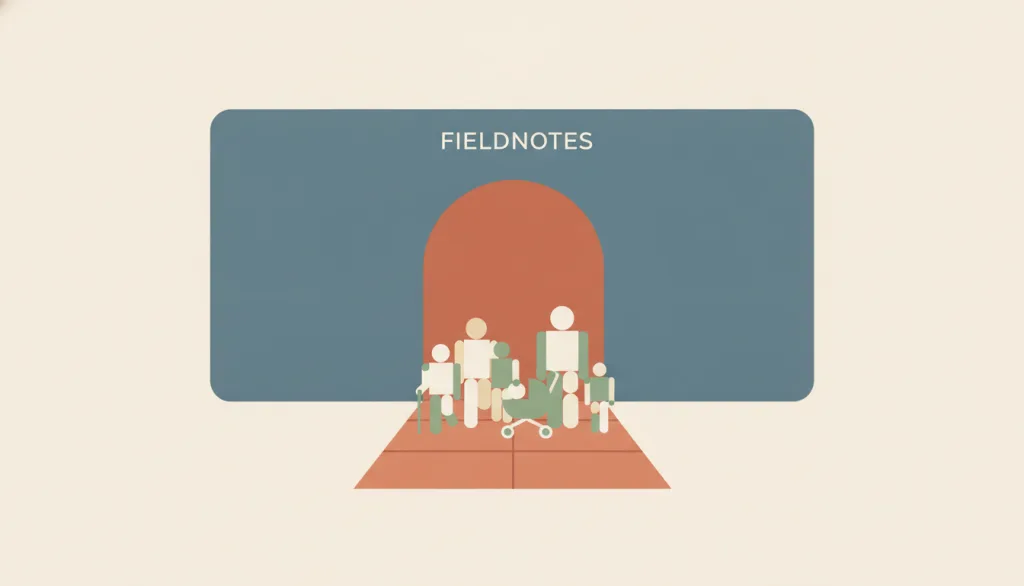
A methodology proposed by Ron Mace and the NC State Center for Universal Design: products and environments should be designed to be usable by the widest possible range of people to the greatest extent, without the need for later adaptation or specialized design. This produced seven design principles (equitable use, flexibility in use, simple and intuitive use, perceptible information, tolerance for error, low physical effort, and size and space for approach and use) that guide how to reduce reliance on special accommodations.
Recognizing it
- The same interface or flow lets people of different abilities, ages, and contexts complete the task directly, without switching to a special mode
- Key information is presented in at least two perceptible ways, not dependent on a single sense or a single context of use
- The consequences of a mistake are actively reduced, rather than requiring the user to be more careful or physically capable
Concept boundary
Adjacent to inclusive design but different in method: universal design pursues a single mainstream solution that covers the widest possible range of people, while inclusive design accepts that different groups may need multiple tailored solutions, following a method of "solve for one, extend to many." Universal design is also not the same as accessibility compliance: accessibility focuses on people with disabilities and passing a compliance check, while universal design has a broader scope, emphasizing that as many people as possible can use a design directly from the design stage, rather than building a mainstream solution first and then patching it to meet compliance requirements.
When to consider it
- Designing for a broad population where tailoring a separate solution for every group is impractical (e.g. public services, education, government products)
- Defining how key information is presented and how tolerant and effortless an interaction path is
- A product must serve people of different abilities, ages, and contexts through the same shared entry point
When to be cautious
- Treating a passed accessibility compliance check as having completed universal design
- Validating only one typical type of user, then claiming the design works for everyone
- Insisting on a single solution for groups with very different needs instead of considering inclusive design's multiple-solution path
Tradeoff
Pursuing a single mainstream solution that covers the widest range of people may fit certain specific groups less closely than a solution tailored to them; whether to keep the single solution or move to inclusive design's multiple-solution path requires weighing coverage against fit.
Conditional rules · Editorial advice
Related entries
Both aim to make a design usable by more people, but universal design tends toward a single mainstream solution while inclusive design tends to first recognize specific exclusions and then provide targeted solutions; conflating the two can make a team think one solution is already equivalent to being inclusive.
The seven principles state design goals, but whether a solution is actually perceptible and error-tolerant still needs verification through human-centered iteration with real users, not just a self-check against a list of principles.
The tolerance-for-error principle calls for reducing the consequences of mistakes; error-prevention interface strategies such as constraints, confirmation, and undo are one concrete way to realize it.
Sources and what they support
Gives the definition drafted by a working group led by Ron Mace: universal design is the design of products and environments to be usable by all people to the greatest extent possible, without the need for adaptation or specialized design, and names Mace as the center's founder.
Retrieved: 2026-09-15 · Archived 2026-09-16Lists the seven principles and explains the methodological difference from inclusive design: universal design creates a single solution for the widest range of users, while inclusive design may provide multiple solutions for different groups.
Retrieved: 2026-09-15 · Snapshot unconfirmedStates that accessibility focuses on people with disabilities and does not try to address broader diversity issues, while universal design/inclusive design cover a wider scope; supports this entry's boundary that universal design is not the same as accessibility compliance.
Retrieved: 2026-09-15 · Archived 2026-09-16Definitions reference these sources. Digital specimens, selection advice, relationships, and recipes are editorial work and have not been validated through user research.
Type extensions and implementation notes
No operable specimen yet; the illustration is editorial. When applied to a product, still verify that each of the seven principles was checked against the specific feature, that redundant presentation of key information actually covers the target audience's perceptual differences, and that when a single solution genuinely cannot cover certain groups, the team has moved to inclusive design's multiple-solution path.
{
  "values": [
    "The widest possible usability",
    "Reduced reliance on special accommodation",
    "Perceptibility and tolerance for error"
  ],
  "tension": "A single solution covering the widest range of people versus the fit needed by specific groups",
  "questions": [
    "Can this solution, unmodified, be used directly by as many people as possible?",
    "Does key information depend on a single sense or a single context to be perceived?"
  ]
}
Full Agent entry JSON
{
  "id": "universal-design",
  "type": "philosophy",
  "name": {
    "zh": "通用设计",
    "en": "Universal Design"
  },
  "aliases": [
    "Design for All",
    "泛用设计"
  ],
  "granularity": "experience",
  "intents": [
    "include-users",
    "prevent-error"
  ],
  "tags": [
    "universal design",
    "single solution",
    "perceptible information",
    "tolerance for error",
    "accessibility"
  ],
  "definition": "A methodology proposed by Ron Mace and the NC State Center for Universal Design: products and environments should be designed to be usable by the widest possible range of people to the greatest extent, without the need for later adaptation or specialized design. This produced seven design principles (equitable use, flexibility in use, simple and intuitive use, perceptible information, tolerance for error, low physical effort, and size and space for approach and use) that guide how to reduce reliance on special accommodations.",
  "boundary": "Adjacent to inclusive design but different in method: universal design pursues a single mainstream solution that covers the widest possible range of people, while inclusive design accepts that different groups may need multiple tailored solutions, following a method of \"solve for one, extend to many.\" Universal design is also not the same as accessibility compliance: accessibility focuses on people with disabilities and passing a compliance check, while universal design has a broader scope, emphasizing that as many people as possible can use a design directly from the design stage, rather than building a mainstream solution first and then patching it to meet compliance requirements.",
  "signature": [
    "The same interface or flow lets people of different abilities, ages, and contexts complete the task directly, without switching to a special mode",
    "Key information is presented in at least two perceptible ways, not dependent on a single sense or a single context of use",
    "The consequences of a mistake are actively reduced, rather than requiring the user to be more careful or physically capable"
  ],
  "when": [
    "Designing for a broad population where tailoring a separate solution for every group is impractical (e.g. public services, education, government products)",
    "Defining how key information is presented and how tolerant and effortless an interaction path is",
    "A product must serve people of different abilities, ages, and contexts through the same shared entry point"
  ],
  "when_not": [
    "Treating a passed accessibility compliance check as having completed universal design",
    "Validating only one typical type of user, then claiming the design works for everyone",
    "Insisting on a single solution for groups with very different needs instead of considering inclusive design's multiple-solution path"
  ],
  "tradeoff": "Pursuing a single mainstream solution that covers the widest range of people may fit certain specific groups less closely than a solution tailored to them; whether to keep the single solution or move to inclusive design's multiple-solution path requires weighing coverage against fit.",
  "comparison": {
    "focus": "Whether a single mainstream solution can be designed to cover the widest possible range of people",
    "mechanism": "Seven principles: equitable use, flexibility in use, simple and intuitive use, perceptible information, tolerance for error, low physical effort, and size and space for approach and use",
    "cost": "The wider the coverage, the less closely it may fit any single group's needs"
  },
  "sources": [
    {
      "id": "ncsu-cud",
      "title": "NC State University · Center for Universal Design",
      "url": "https://design.ncsu.edu/research/center-for-universal-design/",
      "claim": "Gives the definition drafted by a working group led by Ron Mace: universal design is the design of products and environments to be usable by all people to the greatest extent possible, without the need for adaptation or specialized design, and names Mace as the center's founder.",
      "checkedAt": "2026-09-15",
      "archive": {
        "lookupUrl": "https://web.archive.org/web/20260915*/https://design.ncsu.edu/research/center-for-universal-design/",
        "status": "available",
        "checkedAt": "2026-09-16T03:53:56.103Z",
        "jobId": "spn2-15c8396c3e5de281487743662256961852100c9b",
        "url": "https://web.archive.org/web/20260916035420/https://design.ncsu.edu/research/center-for-universal-design/",
        "timestamp": "20260916035420"
      }
    },
    {
      "id": "ixdf-universal-design",
      "title": "Interaction Design Foundation · Universal Design",
      "url": "https://ixdf.org/literature/topics/universal-design",
      "claim": "Lists the seven principles and explains the methodological difference from inclusive design: universal design creates a single solution for the widest range of users, while inclusive design may provide multiple solutions for different groups.",
      "checkedAt": "2026-09-15",
      "archive": {
        "lookupUrl": "https://web.archive.org/web/20260915*/https://ixdf.org/literature/topics/universal-design",
        "status": "unconfirmed",
        "checkedAt": "2026-09-16T03:54:16.137Z",
        "error": "status-request-failed",
        "jobId": "spn2-51186743a16520822d67550fb0999c5bb7cd25c8"
      }
    },
    {
      "id": "w3c-wai-accessibility-usability-inclusion",
      "title": "W3C WAI · Accessibility, Usability, and Inclusion",
      "url": "https://www.w3.org/WAI/fundamentals/accessibility-usability-inclusion/",
      "claim": "States that accessibility focuses on people with disabilities and does not try to address broader diversity issues, while universal design/inclusive design cover a wider scope; supports this entry's boundary that universal design is not the same as accessibility compliance.",
      "checkedAt": "2026-09-15",
      "archive": {
        "lookupUrl": "https://web.archive.org/web/20260915*/https://www.w3.org/WAI/fundamentals/accessibility-usability-inclusion/",
        "status": "available",
        "checkedAt": "2026-09-16T04:02:34.126Z",
        "jobId": "spn2-6fc5b1a49bf413682633a5ea0878933662a71a3d",
        "url": "https://web.archive.org/web/20260916040322/https://www.w3.org/WAI/fundamentals/accessibility-usability-inclusion/",
        "timestamp": "20260916040322"
      }
    }
  ],
  "relations": [
    {
      "target": "inclusive-design",
      "kind": "related",
      "condition": "Deciding whether to use one mainstream solution or provide multiple solutions for different groups",
      "reason": "Both aim to make a design usable by more people, but universal design tends toward a single mainstream solution while inclusive design tends to first recognize specific exclusions and then provide targeted solutions; conflating the two can make a team think one solution is already equivalent to being inclusive.",
      "basis": "editorial"
    },
    {
      "target": "human-centered-design",
      "kind": "composes_with",
      "condition": "Verifying whether the same solution can actually be used directly by people of different abilities and contexts",
      "reason": "The seven principles state design goals, but whether a solution is actually perceptible and error-tolerant still needs verification through human-centered iteration with real users, not just a self-check against a list of principles.",
      "basis": "editorial"
    },
    {
      "target": "error-prevention",
      "kind": "realized_by",
      "condition": "Implementing the tolerance-for-error and low-physical-effort principles",
      "reason": "The tolerance-for-error principle calls for reducing the consequences of mistakes; error-prevention interface strategies such as constraints, confirmation, and undo are one concrete way to realize it.",
      "basis": "editorial"
    }
  ],
  "rules": [
    {
      "when": "Presenting key information such as direction, status, or warnings",
      "instruction": "Present it in at least two redundant perceptible ways (for example, text paired with an icon, or sound paired with a visual cue); do not rely on a single sensory channel alone.",
      "strength": "must",
      "basis": "editorial"
    },
    {
      "when": "The same feature may serve people with widely different abilities, ages, or contexts",
      "instruction": "Prefer designing a single mainstream solution that everyone can use directly; add a special mode or separate accommodation for a specific group only when genuinely necessary.",
      "strength": "recommend",
      "basis": "editorial"
    },
    {
      "when": "Designing an interaction path and its feedback",
      "instruction": "Reduce the consequences of mistakes and the physical and fine-motor effort needed to complete the task, rather than requiring the user to be more careful.",
      "strength": "recommend",
      "basis": "editorial"
    }
  ],
  "philosophy": {
    "values": [
      "The widest possible usability",
      "Reduced reliance on special accommodation",
      "Perceptibility and tolerance for error"
    ],
    "tension": "A single solution covering the widest range of people versus the fit needed by specific groups",
    "questions": [
      "Can this solution, unmodified, be used directly by as many people as possible?",
      "Does key information depend on a single sense or a single context to be perceived?"
    ]
  },
  "demo": null,
  "version": "0.1.0",
  "editorialStatus": "drafted",
  "requirements": [],
  "demoCapabilities": [],
  "implementationNote": "No operable specimen yet; the illustration is editorial. When applied to a product, still verify that each of the seven principles was checked against the specific feature, that redundant presentation of key information actually covers the target audience's perceptual differences, and that when a single solution genuinely cannot cover certain groups, the team has moved to inclusive design's multiple-solution path.",
  "image": {
    "src": "/images/universal-design.webp",
    "alt": "A wide doorway that doubles as a ramp, leading into a fictional FIELDNOTES interface, with a figure using a cane, a figure pushing a stroller, and a child walking in side by side."
  },
  "searchTerms": [
    "通用设计",
    "单一方案",
    "可感知信息",
    "容错",
    "无障碍"
  ]
}