VOCABULARY / ENTRY
AI Slop
ai-slop
Content mass-produced by generative models with almost no editing or checking: its purpose is to occupy space in feeds and search results rather than to be useful to a reader. Any one piece may contain no obvious error, but in bulk it pushes worthwhile content out of view.
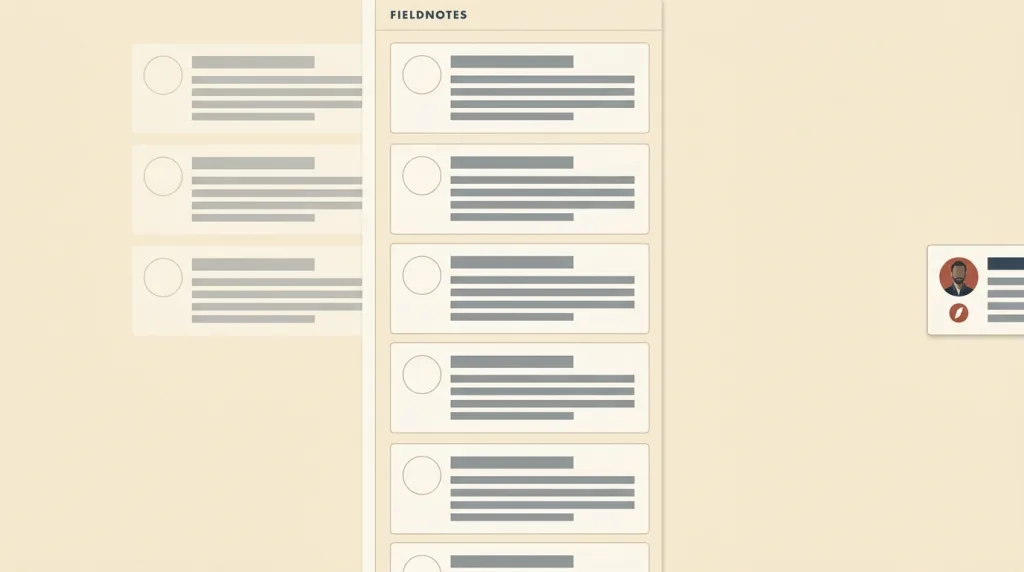
Recognizing it
- Large numbers of pages or posts from one template appear in a short time
- The content answers a search term rather than a reader’s question and circles around any concrete conclusion
- There is no byline, no source, and nobody answerable for accuracy
Concept boundary
The test is production at scale without anyone checking, not that a model was involved. Content drafted by a model and then verified, edited, and signed for by a person is not what this entry means; conversely, worthless material assembled in bulk by people is the same mechanism, only slower. The heart of this anti-pattern is therefore not the tool but the gap between volume and responsibility: who answers for this piece being accurate, and if nobody does, it is what this entry names. This is a warning entry and offers nothing about generating in bulk more efficiently.
When to consider it
- Auditing whether such content has already entered one’s own site or feed
- Assessing how much work actually went into a content vendor’s or partner’s deliverables
When to be cautious
- As a way to raise publishing volume or search ranking
- Treating a quick skim after the fact as having done the checking
Tradeoff
The repair is to take responsibility back: every piece has a named person answerable for it, verifiable sources, and a real editing record. Output slows, but what gets seen is once again tied to what was put in. For a platform, the repair is to stop rewarding bulk, unsourced content with distribution.
Conditional rules · Editorial advice
Related entries
Marking the origin is necessary but does not solve this: a worthless piece honestly labelled as AI-generated is still worthless.
Content whose basis cannot be traced cannot be checked at all, leaving readers only to believe it or ignore it.
Readers cannot sort it piece by piece and lower their trust in the channel as a whole, which costs the reliable content in it too.
Inspectable sources are the concrete mechanism that turns believing into checking, and they are the first thing this kind of content lacks.
Sources and what they support
The article defines AI slop, also known as slop content or simply slop, as digital content made with generative artificial intelligence that is perceived as lacking in effort, quality, or meaning, and records the proliferation of such images on social platforms in 2024. This entry paraphrases the definition from it; the judgement about where responsibility lies is editorial.
Retrieved: 2026-09-16 · Snapshot unconfirmedThe policy defines scaled content abuse as generating many pages for the primary purpose of manipulating search rankings rather than helping users, explains that the practice typically focuses on creating large amounts of unoriginal content that provides little to no value to users no matter how it is created, and lists using generative AI tools or other similar tools to generate many pages without adding value for users among its examples. This entry takes from it how the practice is defined on the search side, and uses it to support the boundary that the test is scale and checking rather than the tool.
Retrieved: 2026-09-16 · Snapshot unconfirmedDefinitions reference these sources. Digital specimens, selection advice, relationships, and recipes are editorial work and have not been validated through user research.
Type extensions and implementation notes
This is a warning entry: it is not a recommendation and offers no method for generating in bulk. The illustration is an editorial sketch whose headlines and body are invented placeholders. When auditing a channel, the question to ask is who is answerable for a piece, not whether a model produced it.
{
  "harm": "It occupies visible space at near-zero cost, crowds out content that was edited and checked, removes the reader’s basis for telling them apart, and lowers trust in the whole channel",
  "repair": "Take responsibility back: a named person answerable for each piece, verifiable sources, and a real editing record; on the platform side, remove the distribution advantage for bulk unsourced content and let readers mute a source."
}
Full Agent entry JSON
{
  "id": "ai-slop",
  "type": "anti",
  "name": {
    "zh": "AI 垃圾内容",
    "en": "AI Slop"
  },
  "aliases": [
    "Slop",
    "Slop Content",
    "AI 灌水",
    "生成式垃圾内容"
  ],
  "granularity": "experience",
  "intents": [
    "audit-choice",
    "disclose-ai-origin"
  ],
  "tags": [
    "anti-pattern",
    "generated content",
    "at scale",
    "feed",
    "search ranking"
  ],
  "definition": "Content mass-produced by generative models with almost no editing or checking: its purpose is to occupy space in feeds and search results rather than to be useful to a reader. Any one piece may contain no obvious error, but in bulk it pushes worthwhile content out of view.",
  "boundary": "The test is production at scale without anyone checking, not that a model was involved. Content drafted by a model and then verified, edited, and signed for by a person is not what this entry means; conversely, worthless material assembled in bulk by people is the same mechanism, only slower. The heart of this anti-pattern is therefore not the tool but the gap between volume and responsibility: who answers for this piece being accurate, and if nobody does, it is what this entry names. This is a warning entry and offers nothing about generating in bulk more efficiently.",
  "signature": [
    "Large numbers of pages or posts from one template appear in a short time",
    "The content answers a search term rather than a reader’s question and circles around any concrete conclusion",
    "There is no byline, no source, and nobody answerable for accuracy"
  ],
  "when": [
    "Auditing whether such content has already entered one’s own site or feed",
    "Assessing how much work actually went into a content vendor’s or partner’s deliverables"
  ],
  "when_not": [
    "As a way to raise publishing volume or search ranking",
    "Treating a quick skim after the fact as having done the checking"
  ],
  "tradeoff": "The repair is to take responsibility back: every piece has a named person answerable for it, verifiable sources, and a real editing record. Output slows, but what gets seen is once again tied to what was put in. For a platform, the repair is to stop rewarding bulk, unsourced content with distribution.",
  "comparison": {
    "focus": "Occupying visible space through bulk output without taking responsibility for it",
    "mechanism": "Templated mass generation with no editing, verification, or byline",
    "cost": "It pushes worthwhile content out of view and erodes trust in the whole channel"
  },
  "sources": [
    {
      "id": "aislop-wikipedia",
      "title": "Wikipedia · AI slop",
      "url": "https://en.wikipedia.org/wiki/Slop_(artificial_intelligence)",
      "claim": "The article defines AI slop, also known as slop content or simply slop, as digital content made with generative artificial intelligence that is perceived as lacking in effort, quality, or meaning, and records the proliferation of such images on social platforms in 2024. This entry paraphrases the definition from it; the judgement about where responsibility lies is editorial.",
      "checkedAt": "2026-09-16",
      "archive": {
        "lookupUrl": "https://web.archive.org/web/20260916*/https://en.wikipedia.org/wiki/Slop_(artificial_intelligence)",
        "status": "pending",
        "checkedAt": "2026-09-16T17:42:19.185Z",
        "error": "status-request-failed",
        "jobId": "spn2-16e7d78c290ab3e9d07b01a0fffe3938e5cf6f1f"
      }
    },
    {
      "id": "aislop-google-spam",
      "title": "Google Search Central · Spam policies for Google web search",
      "url": "https://developers.google.com/search/docs/essentials/spam-policies",
      "claim": "The policy defines scaled content abuse as generating many pages for the primary purpose of manipulating search rankings rather than helping users, explains that the practice typically focuses on creating large amounts of unoriginal content that provides little to no value to users no matter how it is created, and lists using generative AI tools or other similar tools to generate many pages without adding value for users among its examples. This entry takes from it how the practice is defined on the search side, and uses it to support the boundary that the test is scale and checking rather than the tool.",
      "checkedAt": "2026-09-16",
      "archive": {
        "lookupUrl": "https://web.archive.org/web/20260916*/https://developers.google.com/search/docs/essentials/spam-policies",
        "status": "pending",
        "checkedAt": "2026-09-22T11:58:11.691Z",
        "error": "status-request-failed",
        "jobId": "spn2-75a0b4a06de3c28421b87101724178ad890ccec3"
      }
    }
  ],
  "relations": [
    {
      "target": "ai-label",
      "kind": "related",
      "condition": "A model really was involved in producing the content",
      "reason": "Marking the origin is necessary but does not solve this: a worthless piece honestly labelled as AI-generated is still worthless.",
      "basis": "editorial"
    },
    {
      "target": "explainability",
      "kind": "conflicts_when",
      "condition": "The content states conclusions without being able to show its basis or sources",
      "reason": "Content whose basis cannot be traced cannot be checked at all, leaving readers only to believe it or ignore it.",
      "basis": "editorial"
    },
    {
      "target": "trust-calibration",
      "kind": "conflicts_when",
      "condition": "The share of such content in a channel rises",
      "reason": "Readers cannot sort it piece by piece and lower their trust in the channel as a whole, which costs the reliable content in it too.",
      "basis": "editorial"
    },
    {
      "target": "source-inspection",
      "kind": "related",
      "condition": "A reader needs to judge whether a piece is worth believing",
      "reason": "Inspectable sources are the concrete mechanism that turns believing into checking, and they are the first thing this kind of content lacks.",
      "basis": "editorial"
    }
  ],
  "rules": [
    {
      "when": "A product publishes content a model helped produce",
      "instruction": "Name a person answerable for each piece’s accuracy and keep verifiable sources; where that is impossible, do not publish.",
      "strength": "must",
      "basis": "editorial"
    },
    {
      "when": "A platform ranks and distributes content its users produce",
      "instruction": "Do not let bulk, unsourced, unattributed content gain a distribution advantage, and give readers a way to mute a source.",
      "strength": "recommend",
      "basis": "editorial"
    }
  ],
  "anti": {
    "harm": "It occupies visible space at near-zero cost, crowds out content that was edited and checked, removes the reader’s basis for telling them apart, and lowers trust in the whole channel",
    "repair": "Take responsibility back: a named person answerable for each piece, verifiable sources, and a real editing record; on the platform side, remove the distribution advantage for bulk unsourced content and let readers mute a source."
  },
  "demo": null,
  "version": "0.1.0",
  "editorialStatus": "drafted",
  "requirements": [],
  "demoCapabilities": [],
  "implementationNote": "This is a warning entry: it is not a recommendation and offers no method for generating in bulk. The illustration is an editorial sketch whose headlines and body are invented placeholders. When auditing a channel, the question to ask is who is answerable for a piece, not whether a model produced it.",
  "image": {
    "src": "/images/ai-slop.webp",
    "alt": "A sketch: a fictional feed filled with cards of identical structure, each with a near-identical placeholder headline, body bars of the same length, and an empty author slot; one card that does carry a byline and a source mark is pushed to the edge and barely visible."
  },
  "searchTerms": [
    "反模式",
    "生成内容",
    "批量",
    "信息流",
    "搜索排名"
  ]
}