VOCABULARY / ENTRY
Chibi
chibi
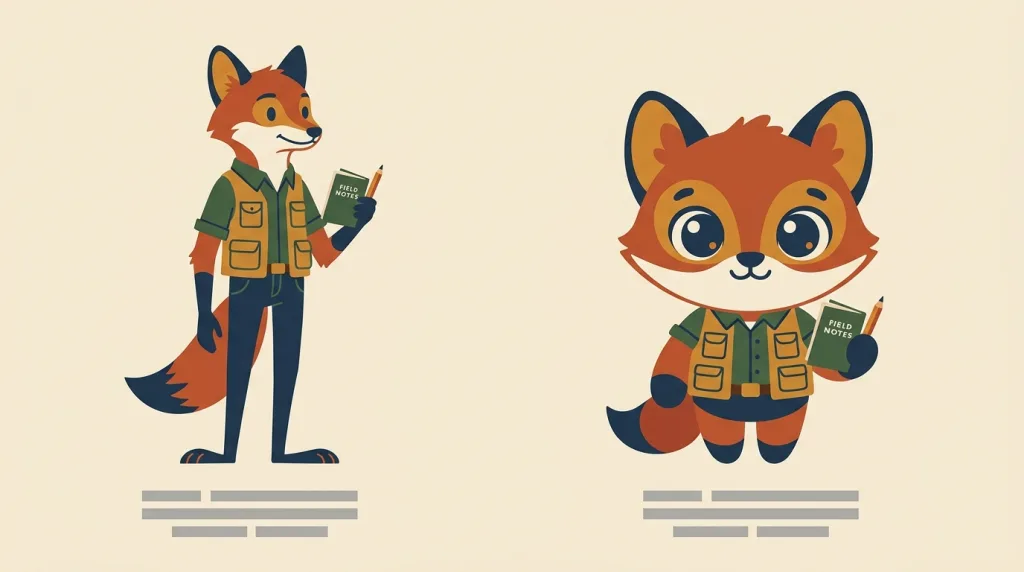
A character-drawing method: the head is enlarged to about half the figure or more, limbs are shortened and rounded, and the face keeps only oversized eyes with a minimal nose and mouth — trading deliberately distorted proportion for cuteness and approachability.
Recognizing it
- Head-to-body ratio compressed to roughly two or three heads
- Short limbs with simplified ends, usually without fingers or joints
- Enlarged eyes paired with a minimal nose and mouth
Concept boundary
This entry covers the proportion-distortion method itself and its use in mascots, stickers, and interface illustration; it does not summarise Japanese animation and manga as a whole, and it is not a synonym for "any cute illustration". The test is the deliberate compression of head-to-body ratio and the systematic removal of detail, not a soft palette or rounded corners. It is a drawing grammar that can sit on top of different coloring and line styles, so chibi and a particular rendering style — cel shading, painterly, flat vector — are two independent dimensions.
When to consider it
- A character and its expression must stay recognisable at very small sizes
- The product needs an approachable, low-pressure figure to guide or accompany users
- One character must be reused heavily as stickers, avatars, or state illustrations
When to be cautious
- The content is serious or involves high-stakes decisions about risk, money, or health
- The character must convey real physical action, body diversity, or professional identity
- A cute figure is used to soften a negative message that should be seen plainly
Tradeoff
Compressed proportion buys small-size recognisability and warmth at the cost of bodily expression and realism: the cuter the figure, the less it can carry serious, professional, or cautionary content.
Conditional rules · Editorial advice
Related entries
Chibi sets the proportion grammar of the character while flat design sets coloring and stroke; the two are independent dimensions that can be chosen separately.
The figure’s warmth makes users underrate the uncertainty of the output, so reliability has to be marked explicitly and separately rather than implied by the character.
A character illustration eases the awkwardness of an empty state but carries no progress or structure information; that still has to come from the state elements themselves.
Sources and what they support
The article explains that chibi, also known as super deformation (SD), is an art style originating in Japan and common in anime and manga, where characters are drawn small and chubby with stubby limbs, oversized eyes and heads, tiny noses and bodies, and minimal detail. This entry paraphrases the drawing description from it; the interface guidance is editorial.
Retrieved: 2026-09-16 · Snapshot unconfirmedDefinitions reference these sources. Digital specimens, selection advice, relationships, and recipes are editorial work and have not been validated through user research.
Type extensions and implementation notes
This entry has no runnable specimen; the illustration is an editorial sketch using an invented character to show the proportion method and represents no existing figure. Before shipping, confirm the character does not weaken serious messages and verify recognisability at the smallest size in use.
{
  "tokens": {
    "surface": "#fbf4e6",
    "ink": "#33302b",
    "accent": "#e08a4b",
    "radiusPx": 20,
    "shadow": "0 3px 10px rgba(51, 48, 43, 0.12)"
  },
  "tokenScope": "This sample recipe — warm cream ground, dark ink outline, orange accent — sketches one common illustration palette. Chibi is a drawing grammar, so the real palette should follow the product’s own visual system."
}
Full Agent entry JSON
{
  "id": "chibi",
  "type": "visual",
  "name": {
    "zh": "Q 版",
    "en": "Chibi"
  },
  "aliases": [
    "Super Deformed",
    "SD Style",
    "Q版造型",
    "二头身"
  ],
  "granularity": "experience",
  "intents": [
    "express-brand",
    "organize-content"
  ],
  "tags": [
    "character design",
    "exaggerated proportion",
    "cute",
    "illustration",
    "mascot"
  ],
  "definition": "A character-drawing method: the head is enlarged to about half the figure or more, limbs are shortened and rounded, and the face keeps only oversized eyes with a minimal nose and mouth — trading deliberately distorted proportion for cuteness and approachability.",
  "boundary": "This entry covers the proportion-distortion method itself and its use in mascots, stickers, and interface illustration; it does not summarise Japanese animation and manga as a whole, and it is not a synonym for \"any cute illustration\". The test is the deliberate compression of head-to-body ratio and the systematic removal of detail, not a soft palette or rounded corners. It is a drawing grammar that can sit on top of different coloring and line styles, so chibi and a particular rendering style — cel shading, painterly, flat vector — are two independent dimensions.",
  "signature": [
    "Head-to-body ratio compressed to roughly two or three heads",
    "Short limbs with simplified ends, usually without fingers or joints",
    "Enlarged eyes paired with a minimal nose and mouth"
  ],
  "when": [
    "A character and its expression must stay recognisable at very small sizes",
    "The product needs an approachable, low-pressure figure to guide or accompany users",
    "One character must be reused heavily as stickers, avatars, or state illustrations"
  ],
  "when_not": [
    "The content is serious or involves high-stakes decisions about risk, money, or health",
    "The character must convey real physical action, body diversity, or professional identity",
    "A cute figure is used to soften a negative message that should be seen plainly"
  ],
  "tradeoff": "Compressed proportion buys small-size recognisability and warmth at the cost of bodily expression and realism: the cuter the figure, the less it can carry serious, professional, or cautionary content.",
  "comparison": {
    "focus": "Trading proportion distortion for cuteness and small-size recognisability",
    "mechanism": "Enlarged head, shortened limbs, systematic removal of detail",
    "cost": "Bodily expression is lost and serious content becomes hard to carry"
  },
  "sources": [
    {
      "id": "chibi-wikipedia",
      "title": "Wikipedia · Chibi (style)",
      "url": "https://en.wikipedia.org/wiki/Chibi_(style)",
      "claim": "The article explains that chibi, also known as super deformation (SD), is an art style originating in Japan and common in anime and manga, where characters are drawn small and chubby with stubby limbs, oversized eyes and heads, tiny noses and bodies, and minimal detail. This entry paraphrases the drawing description from it; the interface guidance is editorial.",
      "checkedAt": "2026-09-16",
      "archive": {
        "lookupUrl": "https://web.archive.org/web/20260916*/https://en.wikipedia.org/wiki/Chibi_(style)",
        "status": "unconfirmed",
        "checkedAt": "2026-09-16T13:05:04.050Z",
        "error": "status-request-failed",
        "jobId": "spn2-8ddf12416d934609b8b54be53794e4f1723e8c9e"
      }
    }
  ],
  "relations": [
    {
      "target": "flat-design",
      "kind": "composes_with",
      "condition": "Character illustration has to coexist with a flat interface style",
      "reason": "Chibi sets the proportion grammar of the character while flat design sets coloring and stroke; the two are independent dimensions that can be chosen separately.",
      "basis": "editorial"
    },
    {
      "target": "ai-label",
      "kind": "conflicts_when",
      "condition": "A cute character presents automatically generated results or their reliability",
      "reason": "The figure’s warmth makes users underrate the uncertainty of the output, so reliability has to be marked explicitly and separately rather than implied by the character.",
      "basis": "editorial"
    },
    {
      "target": "skeleton",
      "kind": "related",
      "condition": "An empty or waiting state needs an illustration to hold the space",
      "reason": "A character illustration eases the awkwardness of an empty state but carries no progress or structure information; that still has to come from the state elements themselves.",
      "basis": "editorial"
    }
  ],
  "rules": [
    {
      "when": "The character conveys errors, risk, or consequences the user must bear",
      "instruction": "State the message plainly in neutral, accurate words; do not let the cute figure work to soften how serious it is.",
      "strength": "must",
      "basis": "editorial"
    },
    {
      "when": "One character has to cover several sizes",
      "instruction": "Fix a recognisable silhouette and expression at the smallest size first and add detail upward, rather than shrinking the large drawing.",
      "strength": "recommend",
      "basis": "editorial"
    }
  ],
  "visual": {
    "tokens": {
      "surface": "#fbf4e6",
      "ink": "#33302b",
      "accent": "#e08a4b",
      "radiusPx": 20,
      "shadow": "0 3px 10px rgba(51, 48, 43, 0.12)"
    },
    "tokenScope": "This sample recipe — warm cream ground, dark ink outline, orange accent — sketches one common illustration palette. Chibi is a drawing grammar, so the real palette should follow the product’s own visual system."
  },
  "demo": null,
  "version": "0.1.0",
  "editorialStatus": "drafted",
  "requirements": [],
  "demoCapabilities": [],
  "implementationNote": "This entry has no runnable specimen; the illustration is an editorial sketch using an invented character to show the proportion method and represents no existing figure. Before shipping, confirm the character does not weaken serious messages and verify recognisability at the smallest size in use.",
  "image": {
    "src": "/images/chibi.webp",
    "alt": "A fictional FIELDNOTES illustration board: one invented fox mascot shown side by side at normal proportion and at a two-head chibi proportion, the chibi version with a visibly enlarged head, short rounded limbs, and enlarged eyes, with grey placeholder text bars under each figure."
  },
  "searchTerms": [
    "角色造型",
    "夸张比例",
    "可爱",
    "插画",
    "吉祥物"
  ]
}