VOCABULARY / ENTRY
Disguised Ads
disguised-ads
Style an ad or sponsored placement to look like an ordinary interface element, navigation item, system message, or download button, so that people clicking it do not recognize they are clicking an ad.
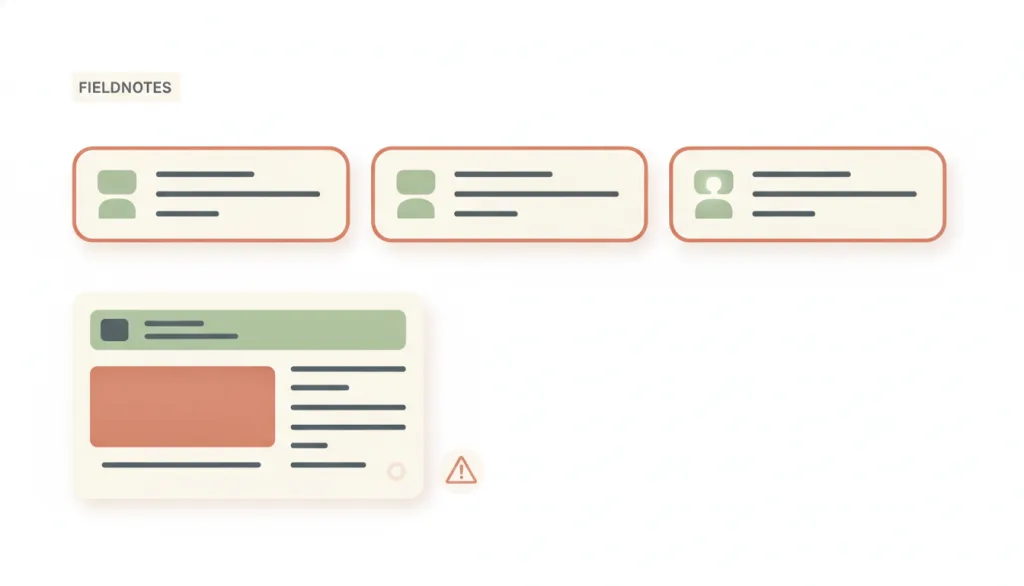
Recognizing it
- The ad is styled to look like a download button, navigation item, or system prompt
- The ad or sponsorship label is missing, or shown only as a tiny, faint icon or color swatch with no adjacent text
- The ad card mimics the layout and wording of real content, making it hard to distinguish from other items in the feed
Concept boundary
Different from clearly labelled native or sponsored content: disclosing "Ad" or "Sponsored" in text right next to the placement is the repair, not the pattern this entry describes. Also different from "interface interference" (a companion anti-pattern being drafted in parallel and not yet in the data file, which concerns the visual prominence of real choices being distorted): this entry's mechanism is an ad impersonating something else, while interface interference distorts the prominence of genuine options. The two can co-occur but should be recorded separately.
When to consider it
- Auditing whether ad placements on content or download pages are confusable with real functional controls or download entry points
- Auditing whether promoted content in a feed or recommendation list carries an adjacent text label
When to be cautious
- Recommending it as a way to increase ad click-through
- Omitting the adjacent text label for an ad in the name of "not breaking visual consistency"
Tradeoff
Repair by labelling ads or sponsored content in adjacent text (not only an icon or color) and making them visually distinct from system controls, navigation, and download buttons. A clearly labelled native ad is not this anti-pattern, but ad revenue must still be weighed against people's perceived trust in the interface.
Conditional rules · Editorial advice
Related entries
Both lead people to click or buy based on an incomplete or incorrect understanding, but the mechanisms differ: one delays fee disclosure, the other disguises content's identity.
Disguised ads often co-occur with a real entry point that is buried or hard to find, but one disguises identity while the other adds difficulty to exiting or completing an action; record them separately.
The consistency principle assumes similar appearance predicts similar behavior; disguised ads exploit that expectation to mislead rather than to help people recognize function.
Sources and what they support
Defines disguised ads as a deceptive pattern where people mistakenly believe they are clicking an interface element or native content when it is actually an ad, and gives the example of download pages using fake download-button ads to trick clicks.
Retrieved: 2026-09-15 · Snapshot unconfirmedThis guide states that an ad or promotional message should not suggest it is anything other than an ad; the more a native ad resembles the surrounding page content in format, style, or subject, the more a clear and prominent disclosure is needed to prevent deception, and it recommends plain terms like "Ad" or "Paid Advertisement" over vague terms like "Promoted" or "Presented by".
Retrieved: 2026-09-15 · Snapshot unconfirmedDefinitions reference these sources. Digital specimens, selection advice, relationships, and recipes are editorial work and have not been validated through user research.
Type extensions and implementation notes
No operable specimen exists yet; the illustration is editorial. Before applying this to a product, verify the actual visual distinction between ads and native content, whether the label text sits adjacent to the ad and is legible, whether the ad reuses navigation or download control visual language, and the specific native-ad disclosure requirements of the relevant ad network or platform.
{
  "harm": "People click without realizing the thing was an ad, spending attention and trust, and may lose trust in real functional controls",
  "repair": "Label ads clearly with adjacent text and make them visually distinct from system controls, navigation, and download buttons."
}
Full Agent entry JSON
{
  "id": "disguised-ads",
  "type": "anti",
  "name": {
    "zh": "伪装广告",
    "en": "Disguised Ads"
  },
  "aliases": [
    "伪装成功能控件的广告",
    "Disguised Advertisement",
    "Fake Download Button Ad"
  ],
  "granularity": "component",
  "intents": [
    "audit-choice"
  ],
  "tags": [
    "anti-pattern",
    "advertising",
    "disguise",
    "native advertising",
    "interface"
  ],
  "definition": "Style an ad or sponsored placement to look like an ordinary interface element, navigation item, system message, or download button, so that people clicking it do not recognize they are clicking an ad.",
  "boundary": "Different from clearly labelled native or sponsored content: disclosing \"Ad\" or \"Sponsored\" in text right next to the placement is the repair, not the pattern this entry describes. Also different from \"interface interference\" (a companion anti-pattern being drafted in parallel and not yet in the data file, which concerns the visual prominence of real choices being distorted): this entry's mechanism is an ad impersonating something else, while interface interference distorts the prominence of genuine options. The two can co-occur but should be recorded separately.",
  "signature": [
    "The ad is styled to look like a download button, navigation item, or system prompt",
    "The ad or sponsorship label is missing, or shown only as a tiny, faint icon or color swatch with no adjacent text",
    "The ad card mimics the layout and wording of real content, making it hard to distinguish from other items in the feed"
  ],
  "when": [
    "Auditing whether ad placements on content or download pages are confusable with real functional controls or download entry points",
    "Auditing whether promoted content in a feed or recommendation list carries an adjacent text label"
  ],
  "when_not": [
    "Recommending it as a way to increase ad click-through",
    "Omitting the adjacent text label for an ad in the name of \"not breaking visual consistency\""
  ],
  "tradeoff": "Repair by labelling ads or sponsored content in adjacent text (not only an icon or color) and making them visually distinct from system controls, navigation, and download buttons. A clearly labelled native ad is not this anti-pattern, but ad revenue must still be weighed against people's perceived trust in the interface.",
  "comparison": {
    "focus": "Whether people can recognize the thing they clicked as an ad",
    "mechanism": "An ad visually impersonates an interface control, navigation item, or system message",
    "cost": "People click ads without realizing it, spending attention and trust, and may come to distrust real functional controls"
  },
  "sources": [
    {
      "id": "deceptive-disguised-ads",
      "title": "Deceptive Patterns · Disguised ads",
      "url": "https://www.deceptive.design/types/disguised-ads",
      "claim": "Defines disguised ads as a deceptive pattern where people mistakenly believe they are clicking an interface element or native content when it is actually an ad, and gives the example of download pages using fake download-button ads to trick clicks.",
      "checkedAt": "2026-09-15",
      "archive": {
        "lookupUrl": "https://web.archive.org/web/20260915*/https://www.deceptive.design/types/disguised-ads",
        "status": "pending",
        "checkedAt": "2026-09-16T05:57:41.281Z",
        "error": "status-request-failed",
        "jobId": "spn2-e38d04c25d0c25b010a8e4404a28491bdeb3d11f"
      }
    },
    {
      "id": "ftc-native-advertising-guide",
      "title": "FTC · Native Advertising: A Guide for Businesses",
      "url": "https://www.ftc.gov/business-guidance/resources/native-advertising-guide-businesses",
      "claim": "This guide states that an ad or promotional message should not suggest it is anything other than an ad; the more a native ad resembles the surrounding page content in format, style, or subject, the more a clear and prominent disclosure is needed to prevent deception, and it recommends plain terms like \"Ad\" or \"Paid Advertisement\" over vague terms like \"Promoted\" or \"Presented by\".",
      "checkedAt": "2026-09-15",
      "archive": {
        "lookupUrl": "https://web.archive.org/web/20260915*/https://www.ftc.gov/business-guidance/resources/native-advertising-guide-businesses",
        "status": "pending",
        "checkedAt": "2026-09-16T05:58:14.531Z",
        "error": "status-request-failed",
        "jobId": "spn2-7acbe0393f8ad66a8d96e8c6b6c6af05f0ca8dd1"
      }
    }
  ],
  "relations": [
    {
      "target": "hidden-costs",
      "kind": "related",
      "condition": "Auditing whether page content is presented in a misleading way",
      "reason": "Both lead people to click or buy based on an incomplete or incorrect understanding, but the mechanisms differ: one delays fee disclosure, the other disguises content's identity.",
      "basis": "editorial"
    },
    {
      "target": "obstruction",
      "kind": "related",
      "condition": "Auditing how discoverable the real functional entry point is on a download or content page",
      "reason": "Disguised ads often co-occur with a real entry point that is buried or hard to find, but one disguises identity while the other adds difficulty to exiting or completing an action; record them separately.",
      "basis": "editorial"
    },
    {
      "target": "consistency",
      "kind": "conflicts_when",
      "condition": "An ad deliberately reuses the visual language of system controls, navigation, or download buttons to borrow credibility",
      "reason": "The consistency principle assumes similar appearance predicts similar behavior; disguised ads exploit that expectation to mislead rather than to help people recognize function.",
      "basis": "editorial"
    }
  ],
  "rules": [
    {
      "when": "Showing an ad, promoted card, or sponsored content",
      "instruction": "Label it as an ad or sponsored content in text immediately adjacent to it; an icon or color alone is not enough.",
      "strength": "must",
      "basis": "editorial"
    },
    {
      "when": "Designing the visual style of an ad or promoted content",
      "instruction": "The ad must not imitate the appearance of a system prompt, navigation control, or download button.",
      "strength": "must",
      "basis": "editorial"
    },
    {
      "when": "Placing an ad slot on a page",
      "instruction": "Avoid placing ads where a person's muscle memory expects a real functional control.",
      "strength": "recommend",
      "basis": "editorial"
    }
  ],
  "anti": {
    "harm": "People click without realizing the thing was an ad, spending attention and trust, and may lose trust in real functional controls",
    "repair": "Label ads clearly with adjacent text and make them visually distinct from system controls, navigation, and download buttons."
  },
  "demo": null,
  "version": "0.1.0",
  "editorialStatus": "drafted",
  "requirements": [],
  "demoCapabilities": [],
  "implementationNote": "No operable specimen exists yet; the illustration is editorial. Before applying this to a product, verify the actual visual distinction between ads and native content, whether the label text sits adjacent to the ad and is legible, whether the ad reuses navigation or download control visual language, and the specific native-ad disclosure requirements of the relevant ad network or platform.",
  "image": {
    "src": "/images/disguised-ads.webp",
    "alt": "A fictional FIELDNOTES article page: three identically styled download buttons, one of which is actually an ad, beside a feed card that mimics a real article but carries only a tiny, faint marker, with a small warning marker in the corner."
  },
  "searchTerms": [
    "反模式",
    "广告",
    "伪装",
    "原生广告",
    "界面"
  ]
}