VOCABULARY / ENTRY
False Scarcity
false-scarcity
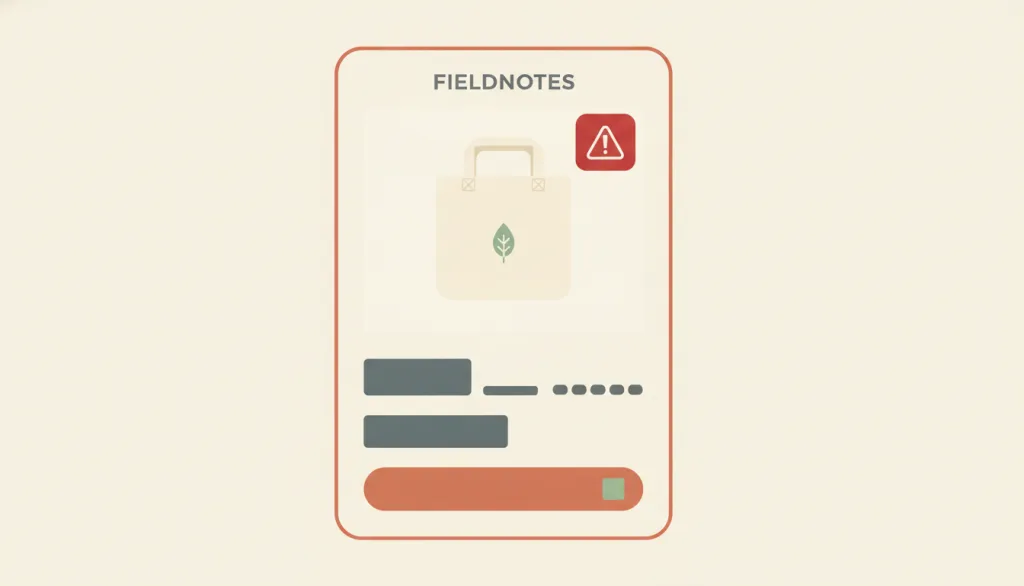
Show people signals of limited supply or strong demand that do not actually exist or cannot be verified (a fabricated "only # left" stock badge, a "# people are viewing/buying this" counter), creating a pressured sense of scarcity that pushes them into a purchase without proper evaluation.
Recognizing it
- The stock or "only # left" badge cannot be traced to a real inventory system, and the number changes inconsistently on reload or across devices
- The "# people are viewing/buying this" counter is wildly out of proportion to the site's actual traffic or order volume, or shows the same number to every visitor
- The low-stock badge or activity counter persists indefinitely; the product never actually sells out and the badge never disappears
Concept boundary
Different from false urgency: the mechanism here is fabricating a quantity or demand signal, not a time deadline; the two often appear together but should be logged separately. A stock or activity number that genuinely traces back to a real inventory system or real concurrent-user data is not this anti-pattern. The test is whether the number is computed from real underlying data, not whether it sounds alarming.
When to consider it
- Auditing stock badges and "# remaining" messages on product and checkout pages
- Auditing whether a "# people are viewing/buying this" counter is bound to real concurrent-visit or order data
- Auditing "selling fast" or "in high demand" labels on promotional pages that repeat with no verifiable source
When to be cautious
- Recommending it as a way to raise conversion
- Displaying a stock or activity number for atmosphere, with no real data behind it
Tradeoff
Repair by keeping only verifiable numbers: a stock badge must reflect a value computed from a real inventory system, and an activity counter must reflect real concurrent visits or purchases. When a number cannot be computed reliably, show no number at all — instead state plainly what "limited" means (a scarce source material, a limited production run, seasonal supply) rather than presenting an isolated, possibly fabricated figure.
Conditional rules · Editorial advice
Related entries
Both fabricate pressure signals, but one targets quantity/supply and the other targets a time deadline — different mechanisms, so log them separately.
The two can appear on the same purchase path, but one delays disclosure of a required fee and the other fabricates supply or demand — different mechanisms, so check them separately.
A fabricated number misleads a person's trust calibration, conflicting with the goal of giving accurate, verifiable trust signals.
Sources and what they support
Defines fake scarcity as showing people a false signal of limited stock or high demand to create an artificial sense of scarcity that pushes them to act quickly out of fear of missing out; the page's examples include low-stock messages and fabricated sales figures among other specific techniques.
Retrieved: 2026-09-15 · Archived 2026-07-20This study's Table 1 shows that a 2019 crawl of about 11K shopping websites identified two types under the "Scarcity" category: Low-stock Message (632 instances across 581 websites) and High-demand Message (47 instances across 43 websites), both tagged as exploiting the "Scarcity Bias" cognitive bias; these figures are a 2019 sampled lower bound, not a current prevalence rate.
Retrieved: 2026-09-15 · Snapshot unconfirmedDefinitions reference these sources. Digital specimens, selection advice, relationships, and recipes are editorial work and have not been validated through user research.
Type extensions and implementation notes
No operable specimen exists yet; the illustration is editorial. Before applying this to a product, verify whether the stock badge and activity counter are actually bound to real inventory and concurrency data, whether the numbers are consistent across different people and times, whether the number is truly removed (not replaced with an estimate) when it cannot be computed, and the specific rules on false scarcity claims in the relevant jurisdiction.
{
  "harm": "Fabricated stock or activity numbers shrink the room for careful comparison, inducing purchases people would not otherwise make, and erode trust in the site's other information once the numbers are found to be fake",
  "repair": "Show a number only when it can be reliably computed from real inventory or concurrency data; when it cannot, remove the number and state the real limitation in words instead."
}
Full Agent entry JSON
{
  "id": "false-scarcity",
  "type": "anti",
  "name": {
    "zh": "虚假稀缺",
    "en": "False Scarcity"
  },
  "aliases": [
    "假稀缺",
    "虚假库存提示",
    "Fake Scarcity"
  ],
  "granularity": "component",
  "intents": [
    "audit-choice",
    "audit-pricing"
  ],
  "tags": [
    "anti-pattern",
    "stock",
    "scarcity",
    "popularity",
    "checkout"
  ],
  "definition": "Show people signals of limited supply or strong demand that do not actually exist or cannot be verified (a fabricated \"only # left\" stock badge, a \"# people are viewing/buying this\" counter), creating a pressured sense of scarcity that pushes them into a purchase without proper evaluation.",
  "boundary": "Different from false urgency: the mechanism here is fabricating a quantity or demand signal, not a time deadline; the two often appear together but should be logged separately. A stock or activity number that genuinely traces back to a real inventory system or real concurrent-user data is not this anti-pattern. The test is whether the number is computed from real underlying data, not whether it sounds alarming.",
  "signature": [
    "The stock or \"only # left\" badge cannot be traced to a real inventory system, and the number changes inconsistently on reload or across devices",
    "The \"# people are viewing/buying this\" counter is wildly out of proportion to the site's actual traffic or order volume, or shows the same number to every visitor",
    "The low-stock badge or activity counter persists indefinitely; the product never actually sells out and the badge never disappears"
  ],
  "when": [
    "Auditing stock badges and \"# remaining\" messages on product and checkout pages",
    "Auditing whether a \"# people are viewing/buying this\" counter is bound to real concurrent-visit or order data",
    "Auditing \"selling fast\" or \"in high demand\" labels on promotional pages that repeat with no verifiable source"
  ],
  "when_not": [
    "Recommending it as a way to raise conversion",
    "Displaying a stock or activity number for atmosphere, with no real data behind it"
  ],
  "tradeoff": "Repair by keeping only verifiable numbers: a stock badge must reflect a value computed from a real inventory system, and an activity counter must reflect real concurrent visits or purchases. When a number cannot be computed reliably, show no number at all — instead state plainly what \"limited\" means (a scarce source material, a limited production run, seasonal supply) rather than presenting an isolated, possibly fabricated figure.",
  "comparison": {
    "focus": "Whether the displayed stock or activity number actually exists",
    "mechanism": "Fabricating or exaggerating stock quantity, or the number of people viewing or buying",
    "cost": "Under a false impression of scarcity, people evaluate less carefully and make purchases they otherwise would not, and lose trust in the site's other information once the number is found to be fake"
  },
  "sources": [
    {
      "id": "deceptive-fake-scarcity",
      "title": "Deceptive Patterns · Fake scarcity",
      "url": "https://www.deceptive.design/types/fake-scarcity/",
      "claim": "Defines fake scarcity as showing people a false signal of limited stock or high demand to create an artificial sense of scarcity that pushes them to act quickly out of fear of missing out; the page's examples include low-stock messages and fabricated sales figures among other specific techniques.",
      "checkedAt": "2026-09-15",
      "archive": {
        "lookupUrl": "https://web.archive.org/web/20260915*/https://www.deceptive.design/types/fake-scarcity/",
        "status": "available",
        "checkedAt": "2026-09-16T04:59:07.000Z",
        "url": "https://web.archive.org/web/20260720200913/https://deceptive.design/types/fake-scarcity/",
        "timestamp": "20260720200913"
      }
    },
    {
      "id": "mathur-dark-patterns-2019",
      "title": "Mathur et al. · Dark Patterns at Scale: Findings from a Crawl of 11K Shopping Websites (2019)",
      "url": "https://arxiv.org/abs/1907.07032",
      "claim": "This study's Table 1 shows that a 2019 crawl of about 11K shopping websites identified two types under the \"Scarcity\" category: Low-stock Message (632 instances across 581 websites) and High-demand Message (47 instances across 43 websites), both tagged as exploiting the \"Scarcity Bias\" cognitive bias; these figures are a 2019 sampled lower bound, not a current prevalence rate.",
      "checkedAt": "2026-09-15",
      "archive": {
        "lookupUrl": "https://web.archive.org/web/20260915*/https://arxiv.org/abs/1907.07032",
        "status": "pending",
        "checkedAt": "2026-09-15T18:37:13.589Z",
        "error": "status-request-failed",
        "jobId": "spn2-e5ed4643b974bae44d820f9d23f4bc9a1ab499a6"
      }
    }
  ],
  "relations": [
    {
      "target": "false-urgency",
      "kind": "related",
      "condition": "Auditing a checkout or product page that shows both a countdown timer and a stock or activity message",
      "reason": "Both fabricate pressure signals, but one targets quantity/supply and the other targets a time deadline — different mechanisms, so log them separately.",
      "basis": "editorial"
    },
    {
      "target": "hidden-costs",
      "kind": "related",
      "condition": "Auditing whether price and stock information on product and checkout pages is complete and trustworthy",
      "reason": "The two can appear on the same purchase path, but one delays disclosure of a required fee and the other fabricates supply or demand — different mechanisms, so check them separately.",
      "basis": "editorial"
    },
    {
      "target": "trust-calibration",
      "kind": "conflicts_when",
      "condition": "An unverifiable stock or activity number is used to shape a person's judgment of the system's state",
      "reason": "A fabricated number misleads a person's trust calibration, conflicting with the goal of giving accurate, verifiable trust signals.",
      "basis": "editorial"
    }
  ],
  "rules": [
    {
      "when": "Showing a stock quantity or an \"only # left\" badge",
      "instruction": "The number must come from a real-time computation against a real inventory system; when it cannot be computed reliably, show no number at all.",
      "strength": "must",
      "basis": "editorial"
    },
    {
      "when": "Showing a \"# people are viewing/buying this\" activity counter",
      "instruction": "The number must reflect real concurrent visits or purchases; when it cannot be reliably measured, remove the component rather than fabricate a number.",
      "strength": "must",
      "basis": "editorial"
    },
    {
      "when": "Supply is genuinely limited",
      "instruction": "State plainly what \"limited\" means (a scarce source material, a limited production run, seasonal supply) rather than showing only an isolated number.",
      "strength": "recommend",
      "basis": "editorial"
    }
  ],
  "anti": {
    "harm": "Fabricated stock or activity numbers shrink the room for careful comparison, inducing purchases people would not otherwise make, and erode trust in the site's other information once the numbers are found to be fake",
    "repair": "Show a number only when it can be reliably computed from real inventory or concurrency data; when it cannot, remove the number and state the real limitation in words instead."
  },
  "demo": null,
  "version": "0.1.0",
  "editorialStatus": "drafted",
  "requirements": [],
  "demoCapabilities": [],
  "implementationNote": "No operable specimen exists yet; the illustration is editorial. Before applying this to a product, verify whether the stock badge and activity counter are actually bound to real inventory and concurrency data, whether the numbers are consistent across different people and times, whether the number is truly removed (not replaced with an estimate) when it cannot be computed, and the specific rules on false scarcity claims in the relevant jurisdiction.",
  "image": {
    "src": "/images/false-scarcity.webp",
    "alt": "A fictional FIELDNOTES product card: a prominent red low-stock badge and a \"# people are viewing this\" activity row are rendered as blank blocks with no real digits, with a small warning triangle beside them."
  },
  "searchTerms": [
    "反模式",
    "库存",
    "稀缺",
    "热度",
    "结算"
  ]
}