VOCABULARY / ENTRY
Hidden Subscription
hidden-subscription
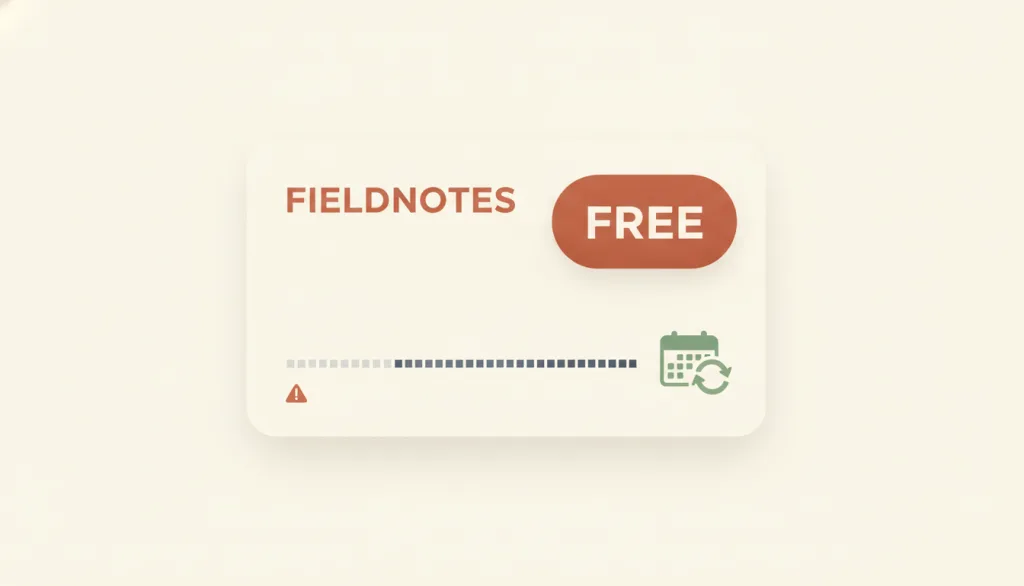
Silently convert a one-off purchase or a free trial into a recurring, periodically billed subscription without clearly disclosing it and obtaining consent at the moment of commitment.
Recognizing it
- No price, billing cadence, or first-charge date appears near the commitment action (placing an order, sharing access, sending an invite, and similar)
- A trial converts to paid automatically with no reminder beforehand
- The subscription starts silently against an on-file payment method, with no confirmation or subsequent billing notice
Concept boundary
Different from hidden costs: hidden costs delays disclosure of a necessary one-time fee, while this entry concerns the fact that a one-off purchase or trial becomes a recurring charge at all; even if the eventual total is transparent, it still counts here if the fact that billing will repeat was not made prominent before commitment. Different from obstruction: obstruction concerns an artificially hard exit path, while this entry concerns whether informed consent was obtained when entering the commitment; the two often co-occur but should be logged separately, and recurring billing should not be folded into either the hard-to-cancel entry or the one-time-fee entry.
When to consider it
- Auditing whether a one-off purchase, free trial, or collaboration invite can trigger recurring charges
- Auditing a cancellation or exit path while also checking how the subscription began
When to be cautious
- Recommending it as a way to raise conversion or retention
Tradeoff
Repair by showing price, billing cadence, first-charge date, and how to cancel clearly next to the commitment control; send a reminder before a trial converts to paid; make cancelling at least as easy as signing up.
Conditional rules · Editorial advice
Related entries
The mechanisms differ: one delays disclosure of a one-time fee, the other fails to disclose that a commitment becomes recurring billing; record them separately and do not fold recurring billing into the one-time-fee entry.
Hidden subscription often co-occurs with an obstructive cancellation path, but the entry-side consent problem and the exit-side difficulty problem are different mechanisms and should be logged separately.
Fabricated or exaggerated time pressure is often used to distract from the recurring-billing terms that follow conversion; record the two issues separately.
Sources and what they support
Defines hidden subscription as a person being unknowingly enrolled in a recurring subscription or payment plan without clear disclosure or explicit consent, often paired with the "hard to cancel" pattern, and gives an example of a collaboration tool silently starting a subscription charge when access is shared.
Retrieved: 2026-09-15 · Archived 2026-09-16Reports that enforcement authorities from 27 countries jointly reviewed 642 subscription-service websites and apps in late January 2024: nearly 76% used at least one possible dark pattern and nearly 67% used multiple, with "sneaking/delaying disclosure of purchase-affecting information" and "interface interference" the most common categories. This entry cites only the review's statistics; the press release itself states it made no determination on whether the practices were unlawful, so it is not a legal finding.
Retrieved: 2026-09-15 · Snapshot unconfirmedDescribes the October 2024 press release for the updated Negative Option Rule: businesses must clearly disclose material terms before taking billing information, must not charge without a person's express informed consent, and must provide a cancellation mechanism as simple as signing up; the Commission approved it 3-2. This entry quotes only the press release's statements and draws no conclusion about the rule's later judicial review, rulemaking history, or current legal force.
Retrieved: 2026-09-15 · Snapshot unconfirmedDefinitions reference these sources. Digital specimens, selection advice, relationships, and recipes are editorial work and have not been validated through user research.
Type extensions and implementation notes
No operable specimen exists yet; the illustration is editorial. Before applying this to a product, verify whether cadence and first-charge date actually appear near the commitment control, whether trial-to-paid reminders are actually delivered, the real visibility and step count of the cancellation entry point, and the specific negative-option and auto-renewal disclosure requirements of the relevant jurisdiction.
{
  "harm": "People carry a recurring billing obligation they never noticed or agreed to, often discovering it only after several charges and needing to dispute them",
  "repair": "Disclose price, cadence, first-charge date, and cancellation method next to the commitment control, remind people before a trial converts to paid, and make cancelling as easy as signing up."
}
Full Agent entry JSON
{
  "id": "hidden-subscription",
  "type": "anti",
  "name": {
    "zh": "隐性订阅",
    "en": "Hidden Subscription"
  },
  "aliases": [
    "隐藏订阅",
    "静默转为订阅",
    "Silent Subscription"
  ],
  "granularity": "flow",
  "intents": [
    "audit-pricing",
    "audit-exit"
  ],
  "tags": [
    "anti-pattern",
    "subscription",
    "trial",
    "checkout",
    "informed consent"
  ],
  "definition": "Silently convert a one-off purchase or a free trial into a recurring, periodically billed subscription without clearly disclosing it and obtaining consent at the moment of commitment.",
  "boundary": "Different from hidden costs: hidden costs delays disclosure of a necessary one-time fee, while this entry concerns the fact that a one-off purchase or trial becomes a recurring charge at all; even if the eventual total is transparent, it still counts here if the fact that billing will repeat was not made prominent before commitment. Different from obstruction: obstruction concerns an artificially hard exit path, while this entry concerns whether informed consent was obtained when entering the commitment; the two often co-occur but should be logged separately, and recurring billing should not be folded into either the hard-to-cancel entry or the one-time-fee entry.",
  "signature": [
    "No price, billing cadence, or first-charge date appears near the commitment action (placing an order, sharing access, sending an invite, and similar)",
    "A trial converts to paid automatically with no reminder beforehand",
    "The subscription starts silently against an on-file payment method, with no confirmation or subsequent billing notice"
  ],
  "when": [
    "Auditing whether a one-off purchase, free trial, or collaboration invite can trigger recurring charges",
    "Auditing a cancellation or exit path while also checking how the subscription began"
  ],
  "when_not": [
    "Recommending it as a way to raise conversion or retention"
  ],
  "tradeoff": "Repair by showing price, billing cadence, first-charge date, and how to cancel clearly next to the commitment control; send a reminder before a trial converts to paid; make cancelling at least as easy as signing up.",
  "comparison": {
    "focus": "Whether a recurring billing commitment was clearly disclosed and consented to",
    "mechanism": "Silently converting a one-off purchase or free trial into a periodic automatic charge",
    "cost": "People carry an ongoing financial obligation they never noticed, often discovered only after several charges"
  },
  "sources": [
    {
      "id": "deceptive-hidden-subscription",
      "title": "Deceptive Patterns · Hidden subscription",
      "url": "https://www.deceptive.design/types/hidden-subscription",
      "claim": "Defines hidden subscription as a person being unknowingly enrolled in a recurring subscription or payment plan without clear disclosure or explicit consent, often paired with the \"hard to cancel\" pattern, and gives an example of a collaboration tool silently starting a subscription charge when access is shared.",
      "checkedAt": "2026-09-15",
      "archive": {
        "lookupUrl": "https://web.archive.org/web/20260915*/https://www.deceptive.design/types/hidden-subscription",
        "status": "available",
        "checkedAt": "2026-09-16T04:07:35.991Z",
        "jobId": "spn2-3aaede01987fe690b0a2cd87da3b44d1fa501d82",
        "url": "https://web.archive.org/web/20260916040802/https://deceptive.design/types/hidden-subscription/",
        "timestamp": "20260916040802"
      }
    },
    {
      "id": "ftc-icpen-gpen-2024",
      "title": "FTC · FTC, ICPEN, and GPEN Announce Results of Review on the Use of Dark Patterns Affecting Subscription Services, Privacy (2024-07)",
      "url": "https://www.ftc.gov/news-events/news/press-releases/2024/07/ftc-icpen-gpen-announce-results-review-use-dark-patterns-affecting-subscription-services-privacy",
      "claim": "Reports that enforcement authorities from 27 countries jointly reviewed 642 subscription-service websites and apps in late January 2024: nearly 76% used at least one possible dark pattern and nearly 67% used multiple, with \"sneaking/delaying disclosure of purchase-affecting information\" and \"interface interference\" the most common categories. This entry cites only the review's statistics; the press release itself states it made no determination on whether the practices were unlawful, so it is not a legal finding.",
      "checkedAt": "2026-09-15",
      "archive": {
        "lookupUrl": "https://web.archive.org/web/20260915*/https://www.ftc.gov/news-events/news/press-releases/2024/07/ftc-icpen-gpen-announce-results-review-use-dark-patterns-affecting-subscription-services-privacy",
        "status": "unconfirmed",
        "checkedAt": "2026-09-16T03:54:39.143Z",
        "error": "status-request-failed",
        "jobId": "spn2-57e409adba895fb660356c69c45e95fec8d1f5a0"
      }
    },
    {
      "id": "ftc-click-to-cancel-2024",
      "title": "FTC · Federal Trade Commission Announces Final “Click-to-Cancel” Rule (2024-10-16)",
      "url": "https://www.ftc.gov/news-events/news/press-releases/2024/10/federal-trade-commission-announces-final-click-cancel-rule-making-it-easier-consumers-end-recurring",
      "claim": "Describes the October 2024 press release for the updated Negative Option Rule: businesses must clearly disclose material terms before taking billing information, must not charge without a person's express informed consent, and must provide a cancellation mechanism as simple as signing up; the Commission approved it 3-2. This entry quotes only the press release's statements and draws no conclusion about the rule's later judicial review, rulemaking history, or current legal force.",
      "checkedAt": "2026-09-15",
      "archive": {
        "lookupUrl": "https://web.archive.org/web/20260915*/https://www.ftc.gov/news-events/news/press-releases/2024/10/federal-trade-commission-announces-final-click-cancel-rule-making-it-easier-consumers-end-recurring",
        "status": "unconfirmed",
        "checkedAt": "2026-09-15T18:18:33.388Z",
        "error": "status-request-failed",
        "jobId": "spn2-3688daaebed4104230f60816432f1bdec08c8ac0"
      }
    }
  ],
  "relations": [
    {
      "target": "hidden-costs",
      "kind": "related",
      "condition": "Auditing whether pricing and checkout fully disclose charges",
      "reason": "The mechanisms differ: one delays disclosure of a one-time fee, the other fails to disclose that a commitment becomes recurring billing; record them separately and do not fold recurring billing into the one-time-fee entry.",
      "basis": "editorial"
    },
    {
      "target": "obstruction",
      "kind": "composes_with",
      "condition": "A silently started subscription is then hard to cancel",
      "reason": "Hidden subscription often co-occurs with an obstructive cancellation path, but the entry-side consent problem and the exit-side difficulty problem are different mechanisms and should be logged separately.",
      "basis": "editorial"
    },
    {
      "target": "false-urgency",
      "kind": "composes_with",
      "condition": "Urgency copy about a limited-time free trial obscures the fact that it later converts to paid",
      "reason": "Fabricated or exaggerated time pressure is often used to distract from the recurring-billing terms that follow conversion; record the two issues separately.",
      "basis": "editorial"
    }
  ],
  "rules": [
    {
      "when": "Next to a commitment control (placing an order, starting a trial, accepting an invite, and similar)",
      "instruction": "Show price, billing cadence, first-charge date, and how to cancel clearly before the person confirms.",
      "strength": "must",
      "basis": "editorial"
    },
    {
      "when": "A free trial is about to convert automatically to paid",
      "instruction": "Send a verifiable reminder before the charge occurs.",
      "strength": "recommend",
      "basis": "editorial"
    },
    {
      "when": "Providing a cancellation entry point for a subscription",
      "instruction": "Make the steps and visibility of cancelling at least as easy as signing up.",
      "strength": "recommend",
      "basis": "editorial"
    }
  ],
  "anti": {
    "harm": "People carry a recurring billing obligation they never noticed or agreed to, often discovering it only after several charges and needing to dispute them",
    "repair": "Disclose price, cadence, first-charge date, and cancellation method next to the commitment control, remind people before a trial converts to paid, and make cancelling as easy as signing up."
  },
  "demo": null,
  "version": "0.1.0",
  "editorialStatus": "drafted",
  "requirements": [],
  "demoCapabilities": [],
  "implementationNote": "No operable specimen exists yet; the illustration is editorial. Before applying this to a product, verify whether cadence and first-charge date actually appear near the commitment control, whether trial-to-paid reminders are actually delivered, the real visibility and step count of the cancellation entry point, and the specific negative-option and auto-renewal disclosure requirements of the relevant jurisdiction.",
  "image": {
    "src": "/images/hidden-subscription.webp",
    "alt": "A fictional FIELDNOTES checkout card: a large \"free\" badge sits above a tiny greyed-out line noting the recurring charge, beside a calendar icon with a repeating arrow and a small warning marker."
  },
  "searchTerms": [
    "反模式",
    "订阅",
    "试用",
    "结算",
    "知情同意"
  ]
}