VOCABULARY / ENTRY
Visual Maximalism
maximalism
Treating abundance itself as a deliberate visual strategy: layering multiple patterns and decorative elements on the same surface, juxtaposing many colors with several typefaces and type sizes, and pursuing high information density — using density as a chosen expressive means rather than as the accidental result of piling elements on top of each other.
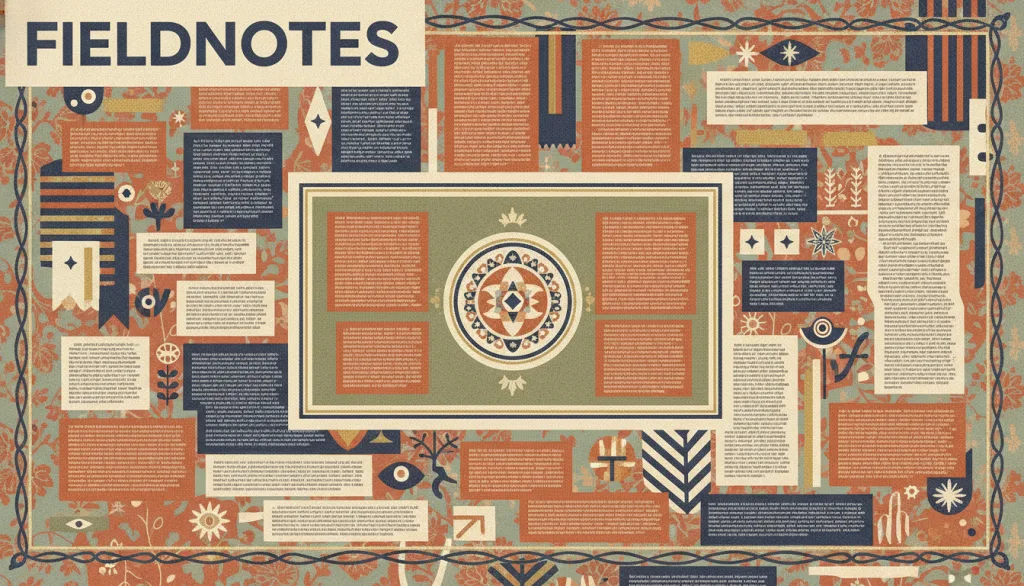
Recognizing it
- Multiple patterns and decorative layers are stacked on the same surface, leaving almost no empty space
- Many, often highly saturated, colors are juxtaposed while several type sizes and typefaces carry hierarchy and expression together
- Information density is high, but the primary action and reading order are deliberately preserved rather than left to disordered accumulation
Concept boundary
Visual maximalism means treating abundance itself as a deliberate strategy — dense layering, many colors and typefaces together, ornament and pattern, and high information density working in concert; not every style that 'looks full' should be lumped into one category. It is not the same as neo-brutalism: neo-brutalism creates directness through heavy outlines, hard drop shadows, and near-default browser typefaces, usually with restrained color and a regular composition — its sense of boldness comes from being deliberately unpolished, not from stacking layers. It is not the same as memphis: memphis is a specific historical visual signature established around 1981 by the Memphis Group — clashing colors, doodled curves, collaged speckle patterns, and asymmetric geometry. Maximalism is a broader strategic orientation that memphis can be read as one concrete expression of, but the two terms are not interchangeable. It is also not the same as collage: collage is defined by heterogeneous fragments being joined with visible seams (torn edges, uneven cuts, abrupt jumps in scale), while maximalism can be a continuous surface of rich decoration in one material and illustration language, with no fragment assembly or visible seams required — sheer decorative accumulation is not collage just because it has many elements.
When to consider it
- The content itself is rich and layered, and needs visual abundance to match its character — creative portfolios, narrative content, or brand pages that foreground personality
- The brand wants an immersive, memorable visual language built from density, and is willing to invest the extra design and verification work needed to keep a clear primary/secondary hierarchy
When to be cautious
- Piling on visual elements, colors, and patterns to cover up an information architecture that has not yet been thought through, instead of first settling content priorities
- Dense decorative layers obscure the primary action or disrupt the reading order of body content and key paths
- The team has no resources to verify, layer by layer, the contrast between foreground text/controls and the decoration behind them
Tradeoff
Abundant layering, color, and type combinations can create strong immersion and memorability, but they require extra design and verification work to keep the reading order clear, keep the primary action discoverable, and keep the text contrast behind every decorative layer intact; skip that work and density quickly works against usability instead of for it.
Conditional rules · Editorial advice
Related entries
Neo-brutalism creates directness through heavy outlines, hard drop shadows, and near-default typefaces, usually with restrained color and a regular composition; maximalism creates a sense of abundance by stacking layered patterns, many colors, and multiple typefaces — the two have different visual signatures and compositional logics.
Memphis is a specific historical visual signature established around 1981 (clashing colors, doodled curves, collaged speckle patterns, asymmetric geometry) — one concrete expression of the broader strategic orientation that is maximalism, but maximalism is not limited to memphis's graphic vocabulary.
Collage is defined by heterogeneous fragments joined with visible seams, while maximalism can be a continuous surface of rich decoration in one material and illustration language with no fragment assembly or visible seams required — the two rely on different core signals.
Sources and what they support
This article (Danae Botha, last updated 2026-06-10) defines maximalist design as juxtaposing bold color combinations, contrasting patterns and motifs, repeated elements, minimal white space, layered imagery, and dense, multi-typeface text, directly contrasting it with minimalist design's aim to communicate with as few visual elements as possible, and notes that maximalist design requires designers to deliberately reconcile many coexisting graphic elements. This entry's definition of 'treating abundance as a deliberate strategy' and 'juxtaposing many colors and typefaces' paraphrases it.
Retrieved: 2026-09-15 · Snapshot unconfirmedThis article (published 2022-07-11) characterizes maximalist web design through 'bold colors, loads of videos and images, elements in motion' and a 'mix-and-match of different elements' and 'different fonts,' and devotes a dedicated 'Minimalism vs Maximalism' section contrasting minimalism's 'basic textures, neutral colors, and clean lines' with maximalism's blending of 'colors, tones, fonts, and styles.' This entry's 'dense layering' and 'many colors and typefaces' characterization, and its contrast with minimalism, paraphrase it.
Retrieved: 2026-09-15 · Archived 2026-09-16This article (Matt Stewart, published 2018-08-01, updated 2024-10-01) describes maximalist design as a 'no-holds-barred approach... embracing excess, getting loud, and adding distinctive visual flair,' positioning it as a direct response to minimalist design's 'simple elements' and 'generous white space,' while also cautioning that maximalist design must still 'serve a purpose' and maintain a clear visual hierarchy and navigation. This entry's framing of 'abundance as a deliberate strategy' that must 'preserve a clear hierarchy' paraphrases it.
Retrieved: 2026-09-15 · Archived 2026-09-16Definitions reference these sources. Digital specimens, selection advice, relationships, and recipes are editorial work and have not been validated through user research.
Type extensions and implementation notes
This entry has no operable specimen yet; the illustration is an editorial sketch. When applied to a product, verify that each decorative layer behind text and controls independently meets contrast requirements, that dense layers and patterns still let users find the primary action and reading order at a glance, and that the specific color and typeface combinations remain controllable with real content across multiple screen sizes.
{
  "tokens": {
    "surface": "#f5ead6",
    "ink": "#2b1f18",
    "accent": "#c1432e",
    "radiusPx": 6,
    "shadow": "2px 3px 0 rgba(43,31,24,0.25)"
  },
  "tokenScope": "This specimen recipe only illustrates a single accent color on a warm surface; a real maximalist product typically needs several curated, mutually coordinated accent colors and pattern layers, each verified for contrast against foreground text and controls, rather than reusing this one token set as-is."
}
Full Agent entry JSON
{
  "id": "maximalism",
  "type": "visual",
  "name": {
    "zh": "极繁视觉风格",
    "en": "Visual Maximalism"
  },
  "aliases": [
    "Maximalism",
    "极繁主义",
    "Maximalist Design"
  ],
  "granularity": "experience",
  "intents": [
    "express-brand",
    "organize-content"
  ],
  "tags": [
    "dense layering",
    "many colors and typefaces",
    "ornament and pattern",
    "high information density",
    "abundant expression"
  ],
  "definition": "Treating abundance itself as a deliberate visual strategy: layering multiple patterns and decorative elements on the same surface, juxtaposing many colors with several typefaces and type sizes, and pursuing high information density — using density as a chosen expressive means rather than as the accidental result of piling elements on top of each other.",
  "boundary": "Visual maximalism means treating abundance itself as a deliberate strategy — dense layering, many colors and typefaces together, ornament and pattern, and high information density working in concert; not every style that 'looks full' should be lumped into one category. It is not the same as neo-brutalism: neo-brutalism creates directness through heavy outlines, hard drop shadows, and near-default browser typefaces, usually with restrained color and a regular composition — its sense of boldness comes from being deliberately unpolished, not from stacking layers. It is not the same as memphis: memphis is a specific historical visual signature established around 1981 by the Memphis Group — clashing colors, doodled curves, collaged speckle patterns, and asymmetric geometry. Maximalism is a broader strategic orientation that memphis can be read as one concrete expression of, but the two terms are not interchangeable. It is also not the same as collage: collage is defined by heterogeneous fragments being joined with visible seams (torn edges, uneven cuts, abrupt jumps in scale), while maximalism can be a continuous surface of rich decoration in one material and illustration language, with no fragment assembly or visible seams required — sheer decorative accumulation is not collage just because it has many elements.",
  "signature": [
    "Multiple patterns and decorative layers are stacked on the same surface, leaving almost no empty space",
    "Many, often highly saturated, colors are juxtaposed while several type sizes and typefaces carry hierarchy and expression together",
    "Information density is high, but the primary action and reading order are deliberately preserved rather than left to disordered accumulation"
  ],
  "when": [
    "The content itself is rich and layered, and needs visual abundance to match its character — creative portfolios, narrative content, or brand pages that foreground personality",
    "The brand wants an immersive, memorable visual language built from density, and is willing to invest the extra design and verification work needed to keep a clear primary/secondary hierarchy"
  ],
  "when_not": [
    "Piling on visual elements, colors, and patterns to cover up an information architecture that has not yet been thought through, instead of first settling content priorities",
    "Dense decorative layers obscure the primary action or disrupt the reading order of body content and key paths",
    "The team has no resources to verify, layer by layer, the contrast between foreground text/controls and the decoration behind them"
  ],
  "tradeoff": "Abundant layering, color, and type combinations can create strong immersion and memorability, but they require extra design and verification work to keep the reading order clear, keep the primary action discoverable, and keep the text contrast behind every decorative layer intact; skip that work and density quickly works against usability instead of for it.",
  "comparison": {
    "focus": "Visual expression that treats abundance itself as a deliberate strategy",
    "mechanism": "Dense layering, many colors and typefaces juxtaposed, ornament and pattern, high information density",
    "cost": "Requires extra design and verification work to preserve reading order, keep the primary action discoverable, and check contrast layer by layer"
  },
  "sources": [
    {
      "id": "maximalism-toptal",
      "title": "Toptal · Maximalist Design and the Problem with Minimalism",
      "url": "https://www.toptal.com/designers/ui/maximalist-design",
      "claim": "This article (Danae Botha, last updated 2026-06-10) defines maximalist design as juxtaposing bold color combinations, contrasting patterns and motifs, repeated elements, minimal white space, layered imagery, and dense, multi-typeface text, directly contrasting it with minimalist design's aim to communicate with as few visual elements as possible, and notes that maximalist design requires designers to deliberately reconcile many coexisting graphic elements. This entry's definition of 'treating abundance as a deliberate strategy' and 'juxtaposing many colors and typefaces' paraphrases it.",
      "checkedAt": "2026-09-15",
      "archive": {
        "lookupUrl": "https://web.archive.org/web/20260915*/https://www.toptal.com/designers/ui/maximalist-design",
        "status": "unconfirmed",
        "checkedAt": "2026-09-16T05:38:09.008Z",
        "error": "error:no-request",
        "jobId": "spn2-03ac20522bf7c19a8f4324c855fa3fd7f387390d"
      }
    },
    {
      "id": "maximalism-codrops",
      "title": "Codrops · The Comeback of Maximalism and What it Could Mean for Web Design",
      "url": "https://tympanus.net/codrops/2022/07/11/the-comeback-of-maximalism-and-what-it-could-mean-for-web-design/",
      "claim": "This article (published 2022-07-11) characterizes maximalist web design through 'bold colors, loads of videos and images, elements in motion' and a 'mix-and-match of different elements' and 'different fonts,' and devotes a dedicated 'Minimalism vs Maximalism' section contrasting minimalism's 'basic textures, neutral colors, and clean lines' with maximalism's blending of 'colors, tones, fonts, and styles.' This entry's 'dense layering' and 'many colors and typefaces' characterization, and its contrast with minimalism, paraphrase it.",
      "checkedAt": "2026-09-15",
      "archive": {
        "lookupUrl": "https://web.archive.org/web/20260915*/https://tympanus.net/codrops/2022/07/11/the-comeback-of-maximalism-and-what-it-could-mean-for-web-design/",
        "status": "available",
        "checkedAt": "2026-09-16T05:38:31.508Z",
        "jobId": "spn2-cdb238306f9c46254aaf8a11d8b64bcbcea93301",
        "url": "https://web.archive.org/web/20260916053858/https://tympanus.net/codrops/2022/07/11/the-comeback-of-maximalism-and-what-it-could-mean-for-web-design/",
        "timestamp": "20260916053858"
      }
    },
    {
      "id": "maximalism-creative-momentum",
      "title": "The Creative Momentum · Make It Scream: Maximalism In Web Design",
      "url": "https://www.thecreativemomentum.com/blog/make-it-scream-maximalism-in-web-design",
      "claim": "This article (Matt Stewart, published 2018-08-01, updated 2024-10-01) describes maximalist design as a 'no-holds-barred approach... embracing excess, getting loud, and adding distinctive visual flair,' positioning it as a direct response to minimalist design's 'simple elements' and 'generous white space,' while also cautioning that maximalist design must still 'serve a purpose' and maintain a clear visual hierarchy and navigation. This entry's framing of 'abundance as a deliberate strategy' that must 'preserve a clear hierarchy' paraphrases it.",
      "checkedAt": "2026-09-15",
      "archive": {
        "lookupUrl": "https://web.archive.org/web/20260915*/https://www.thecreativemomentum.com/blog/make-it-scream-maximalism-in-web-design",
        "status": "available",
        "checkedAt": "2026-09-16T05:38:49.818Z",
        "jobId": "spn2-371d535b1e60fee751b83fe9203747e7f7cb3907",
        "url": "https://web.archive.org/web/20260916053913/https://www.thecreativemomentum.com/blog/make-it-scream-maximalism-in-web-design",
        "timestamp": "20260916053913"
      }
    }
  ],
  "relations": [
    {
      "target": "neo-brutalism",
      "kind": "related",
      "condition": "Both are sometimes lumped together loosely as 'visually loud, not restrained' styles, which invites confusion",
      "reason": "Neo-brutalism creates directness through heavy outlines, hard drop shadows, and near-default typefaces, usually with restrained color and a regular composition; maximalism creates a sense of abundance by stacking layered patterns, many colors, and multiple typefaces — the two have different visual signatures and compositional logics.",
      "basis": "editorial"
    },
    {
      "target": "memphis",
      "kind": "related",
      "condition": "Memphis style is often cited as a poster example of 'maximalism'",
      "reason": "Memphis is a specific historical visual signature established around 1981 (clashing colors, doodled curves, collaged speckle patterns, asymmetric geometry) — one concrete expression of the broader strategic orientation that is maximalism, but maximalism is not limited to memphis's graphic vocabulary.",
      "basis": "editorial"
    },
    {
      "target": "collage",
      "kind": "related",
      "condition": "Both can involve a large number of elements on the page, which invites equating the two on density alone",
      "reason": "Collage is defined by heterogeneous fragments joined with visible seams, while maximalism can be a continuous surface of rich decoration in one material and illustration language with no fragment assembly or visible seams required — the two rely on different core signals.",
      "basis": "editorial"
    }
  ],
  "rules": [
    {
      "when": "Stacking dense layers, patterns, and decorative elements on a layout",
      "instruction": "Density must not disrupt the reading order of body content and key paths, nor obscure the primary action for the current task; users must still be able to find the primary action at a glance, not have it buried under rich decoration.",
      "strength": "must",
      "basis": "editorial"
    },
    {
      "when": "Layering decorative patterns, color blocks, or other visual elements behind text or interactive controls",
      "instruction": "Every decorative layer placed behind text or controls must meet accessible contrast requirements against the foreground content; contrast must not be sacrificed for the sake of richer decoration. Where contrast cannot be reliably guaranteed, reserve a low-noise quiet area for that content instead.",
      "strength": "must",
      "basis": "editorial"
    },
    {
      "when": "Deciding whether to adopt a maximalist strategy for a product",
      "instruction": "Use it only where the content's own richness or the brand's character genuinely calls for visual abundance to match it, not to cover up an information architecture that has not yet been worked out; settle content priorities and hierarchy first, then decide which decorative layers to add.",
      "strength": "recommend",
      "basis": "editorial"
    }
  ],
  "visual": {
    "tokens": {
      "surface": "#f5ead6",
      "ink": "#2b1f18",
      "accent": "#c1432e",
      "radiusPx": 6,
      "shadow": "2px 3px 0 rgba(43,31,24,0.25)"
    },
    "tokenScope": "This specimen recipe only illustrates a single accent color on a warm surface; a real maximalist product typically needs several curated, mutually coordinated accent colors and pattern layers, each verified for contrast against foreground text and controls, rather than reusing this one token set as-is."
  },
  "demo": null,
  "version": "0.1.0",
  "editorialStatus": "drafted",
  "requirements": [],
  "demoCapabilities": [],
  "implementationNote": "This entry has no operable specimen yet; the illustration is an editorial sketch. When applied to a product, verify that each decorative layer behind text and controls independently meets contrast requirements, that dense layers and patterns still let users find the primary action and reading order at a glance, and that the specific color and typeface combinations remain controllable with real content across multiple screen sizes.",
  "image": {
    "src": "/images/maximalism.webp",
    "alt": "A fictional field-notes page named FIELDNOTES layered with multiple patterns, several type sizes and color blocks, ornamental borders, and many small elements, but with one clearly readable focal card at the center, in a muted warm palette with several accent colors, illustrating visual maximalism."
  },
  "searchTerms": [
    "密集图层",
    "多色多字体",
    "装饰纹样",
    "高信息密度",
    "丰盛表达"
  ]
}