VOCABULARY / ENTRY
Walled Garden
walled-garden
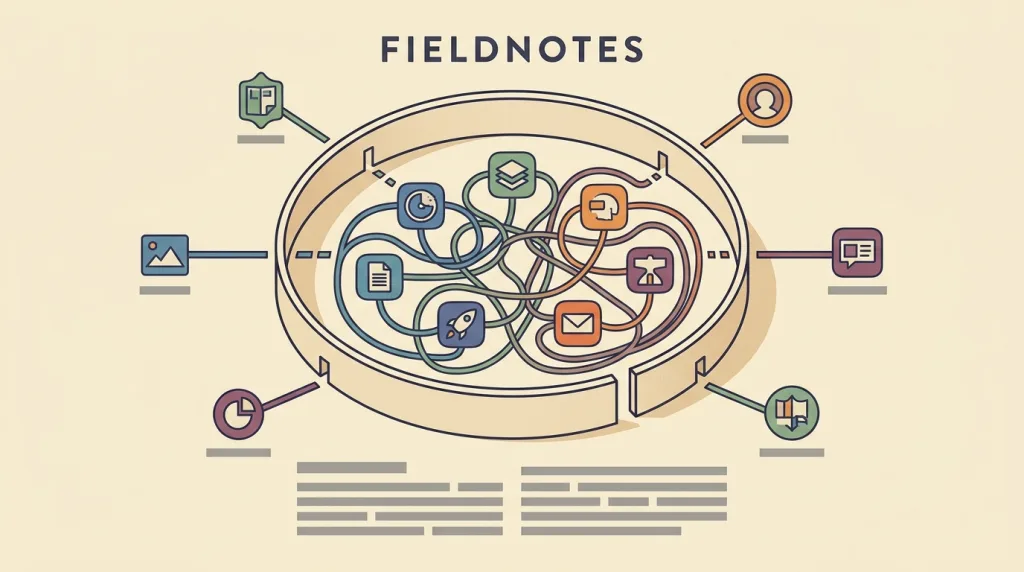
An ecosystem where one provider controls the applications, the content, and the ways in and out: inside the wall things work smoothly, but content, contacts, and data are hard to take out, and outside alternatives are hard to bring in.
Recognizing it
- A user’s content and contacts cannot be exported in a usable form
- Outside services cannot connect even when the user wants them to
- Staying inside is deliberately made far smoother than reaching outside
Concept boundary
This entry targets the design choice of making leaving and interoperating hard, not platform governance as such: reviewing applications, limiting interfaces, and drawing boundaries for safety can all be legitimate, and often the reasons are genuine. What separates them is whom the wall serves — a restriction made for user safety usually still lets people take their own data out, while a restriction made to retain them is tightest at exactly that point. The test here is therefore not how closed something is, but whether the cost of leaving has been deliberately raised. It differs from a specific exit obstacle such as a hidden subscription: that is one gate inside a flow, while a walled garden is structural lock-in at the level of the whole ecosystem.
When to consider it
- Auditing whether one’s own product has raised the cost of leaving too far
- Assessing whether to stake a critical workflow on one closed ecosystem
When to be cautious
- As a product strategy for improving retention or renewal
- Using safety review as the reason not to offer data export, which the two do not require
Tradeoff
The repair is to lower the cost of leaving: complete, structured export that another product can actually read, interfaces that are publicly usable, and letting users decide what connects. Retention then has to be earned by the product rather than bought with switching costs — a choice for the user and a harder bar for the product.
Conditional rules · Editorial advice
Related entries
Obstruction is one concrete gate inside a flow while a walled garden is structural lock-in across an ecosystem — and the second is usually enacted through the first.
When users cannot decide where their own data goes, control sits with the provider rather than with them.
Once there is only one identity entrance, leaving that ecosystem means losing the account, and the wall extends beyond the product itself.
Retention bought with switching costs masks the product’s own problems, which surface all at once when regulation or an alternative opens the wall.
Sources and what they support
The article explains that a closed platform, walled garden, or closed ecosystem is a software system in which the carrier or service provider has control over applications, content, and media and restricts convenient access to non-approved applications or content, in contrast to an open platform where consumers generally have unrestricted access; it gives early mobile operators’ tight control over the services and applications available on a phone as an example. This entry paraphrases the definition from it.
Retrieved: 2026-09-16 · Snapshot unconfirmedThe page explains that the Digital Markets Act is the EU’s law to make markets in the digital sector fairer and more contestable, that it establishes clearly defined objective criteria to identify gatekeepers — large digital platforms providing core platform services such as online search engines, app stores, and messenger services — and that gatekeepers must comply with the obligations and prohibitions the DMA lists. It records that the Regulation was adopted by the European Parliament and the Council on 14 September 2022, published in the Official Journal on 12 October 2022, entered into force on 1 November 2022, and became applicable on 2 May 2023. This entry cites it to show that the structural problem is within a regulator’s view; the specific provisions remain with the legal text.
Retrieved: 2026-09-16Definitions reference these sources. Digital specimens, selection advice, relationships, and recipes are editorial work and have not been validated through user research.
Type extensions and implementation notes
This is a warning entry and not a recommendation; the services and icons in the illustration are invented and point at no particular company or product. The most direct test when auditing a product is whether a user who wants to leave can obtain their complete data, readable elsewhere, in a single action.
{
  "harm": "It retains users through switching costs rather than quality: content and contacts are stranded in one place, users lose their room to choose, and competition weakens with them",
  "repair": "Provide a complete, structured export another product can read and publicly usable interfaces, and let users decide what connects; state the reason and scope of any limit, and make sure safety review does not also block retrieval."
}
Full Agent entry JSON
{
  "id": "walled-garden",
  "type": "anti",
  "name": {
    "zh": "围墙花园",
    "en": "Walled Garden"
  },
  "aliases": [
    "Closed Platform",
    "Closed Ecosystem",
    "封闭生态",
    "封闭平台"
  ],
  "granularity": "experience",
  "intents": [
    "audit-exit",
    "assess-impact"
  ],
  "tags": [
    "anti-pattern",
    "closed",
    "interoperability",
    "data portability",
    "lock-in"
  ],
  "definition": "An ecosystem where one provider controls the applications, the content, and the ways in and out: inside the wall things work smoothly, but content, contacts, and data are hard to take out, and outside alternatives are hard to bring in.",
  "boundary": "This entry targets the design choice of making leaving and interoperating hard, not platform governance as such: reviewing applications, limiting interfaces, and drawing boundaries for safety can all be legitimate, and often the reasons are genuine. What separates them is whom the wall serves — a restriction made for user safety usually still lets people take their own data out, while a restriction made to retain them is tightest at exactly that point. The test here is therefore not how closed something is, but whether the cost of leaving has been deliberately raised. It differs from a specific exit obstacle such as a hidden subscription: that is one gate inside a flow, while a walled garden is structural lock-in at the level of the whole ecosystem.",
  "signature": [
    "A user’s content and contacts cannot be exported in a usable form",
    "Outside services cannot connect even when the user wants them to",
    "Staying inside is deliberately made far smoother than reaching outside"
  ],
  "when": [
    "Auditing whether one’s own product has raised the cost of leaving too far",
    "Assessing whether to stake a critical workflow on one closed ecosystem"
  ],
  "when_not": [
    "As a product strategy for improving retention or renewal",
    "Using safety review as the reason not to offer data export, which the two do not require"
  ],
  "tradeoff": "The repair is to lower the cost of leaving: complete, structured export that another product can actually read, interfaces that are publicly usable, and letting users decide what connects. Retention then has to be earned by the product rather than bought with switching costs — a choice for the user and a harder bar for the product.",
  "comparison": {
    "focus": "Keeping users inside an ecosystem through structural closure",
    "mechanism": "Controlling the ways applications, content, and data get in and out, raising the cost of leaving",
    "cost": "Retention stops reflecting quality and users lose their room to choose"
  },
  "sources": [
    {
      "id": "walledgarden-wikipedia",
      "title": "Wikipedia · Closed platform",
      "url": "https://en.wikipedia.org/wiki/Closed_platform",
      "claim": "The article explains that a closed platform, walled garden, or closed ecosystem is a software system in which the carrier or service provider has control over applications, content, and media and restricts convenient access to non-approved applications or content, in contrast to an open platform where consumers generally have unrestricted access; it gives early mobile operators’ tight control over the services and applications available on a phone as an example. This entry paraphrases the definition from it.",
      "checkedAt": "2026-09-16",
      "archive": {
        "lookupUrl": "https://web.archive.org/web/20260916*/https://en.wikipedia.org/wiki/Closed_platform",
        "status": "unconfirmed",
        "checkedAt": "2026-09-16T17:42:54.471Z",
        "error": "status-request-failed",
        "jobId": "spn2-0681e8d0fb76d1fe929e3b861d41eacfaf5bf9e0"
      }
    },
    {
      "id": "walledgarden-dma",
      "title": "European Commission · About the Digital Markets Act",
      "url": "https://digital-markets-act.ec.europa.eu/about-dma_en",
      "claim": "The page explains that the Digital Markets Act is the EU’s law to make markets in the digital sector fairer and more contestable, that it establishes clearly defined objective criteria to identify gatekeepers — large digital platforms providing core platform services such as online search engines, app stores, and messenger services — and that gatekeepers must comply with the obligations and prohibitions the DMA lists. It records that the Regulation was adopted by the European Parliament and the Council on 14 September 2022, published in the Official Journal on 12 October 2022, entered into force on 1 November 2022, and became applicable on 2 May 2023. This entry cites it to show that the structural problem is within a regulator’s view; the specific provisions remain with the legal text.",
      "checkedAt": "2026-09-16",
      "archive": {
        "lookupUrl": "https://web.archive.org/web/20260916*/https://digital-markets-act.ec.europa.eu/about-dma_en",
        "status": "available",
        "checkedAt": "2026-09-16T17:43:05.226Z",
        "jobId": "spn2-7c53a47e0d39e197a3b914ad7d1d8a58af4d7383",
        "url": "https://web.archive.org/web/20260916174331/https://digital-markets-act.ec.europa.eu/about-dma_en",
        "timestamp": "20260916174331"
      }
    }
  ],
  "relations": [
    {
      "target": "obstruction",
      "kind": "related",
      "condition": "A user tries to leave or to take their data with them",
      "reason": "Obstruction is one concrete gate inside a flow while a walled garden is structural lock-in across an ecosystem — and the second is usually enacted through the first.",
      "basis": "editorial"
    },
    {
      "target": "user-control",
      "kind": "conflicts_when",
      "condition": "A user wants to connect their own content or contacts elsewhere",
      "reason": "When users cannot decide where their own data goes, control sits with the provider rather than with them.",
      "basis": "editorial"
    },
    {
      "target": "single-sign-on",
      "kind": "conflicts_when",
      "condition": "A product makes one closed ecosystem’s identity the only way to sign in",
      "reason": "Once there is only one identity entrance, leaving that ecosystem means losing the account, and the wall extends beyond the product itself.",
      "basis": "editorial"
    },
    {
      "target": "systems-thinking",
      "kind": "composes_with",
      "condition": "Weighing what a closed strategy leads to over a longer horizon",
      "reason": "Retention bought with switching costs masks the product’s own problems, which surface all at once when regulation or an alternative opens the wall.",
      "basis": "editorial"
    }
  ],
  "rules": [
    {
      "when": "A product holds content, contacts, or history that users created",
      "instruction": "Offer a complete, structured export that another product can read, and do not make users retrieve it item by item.",
      "strength": "must",
      "basis": "editorial"
    },
    {
      "when": "Outside access is limited on grounds of safety or review",
      "instruction": "State the specific reason and scope of the limit, and make sure it does not also block users from retrieving their own data.",
      "strength": "recommend",
      "basis": "editorial"
    }
  ],
  "anti": {
    "harm": "It retains users through switching costs rather than quality: content and contacts are stranded in one place, users lose their room to choose, and competition weakens with them",
    "repair": "Provide a complete, structured export another product can read and publicly usable interfaces, and let users decide what connects; state the reason and scope of any limit, and make sure safety review does not also block retrieval."
  },
  "demo": null,
  "version": "0.1.0",
  "editorialStatus": "drafted",
  "requirements": [],
  "demoCapabilities": [],
  "implementationNote": "This is a warning entry and not a recommendation; the services and icons in the illustration are invented and point at no particular company or product. The most direct test when auditing a product is whether a user who wants to leave can obtain their complete data, readable elsewhere, in a single action.",
  "image": {
    "src": "/images/walled-garden.webp",
    "alt": "A sketch: a high wall encircling several fictional service icons whose connecting lines run densely and smoothly inside it; outside the wall a few more fictional service icons reach toward the inside but their lines break at the wall, which has only one very narrow gate."
  },
  "searchTerms": [
    "反模式",
    "封闭",
    "互操作",
    "数据迁移",
    "锁定"
  ]
}