VOCABULARY / ENTRY
Start Page
start-page
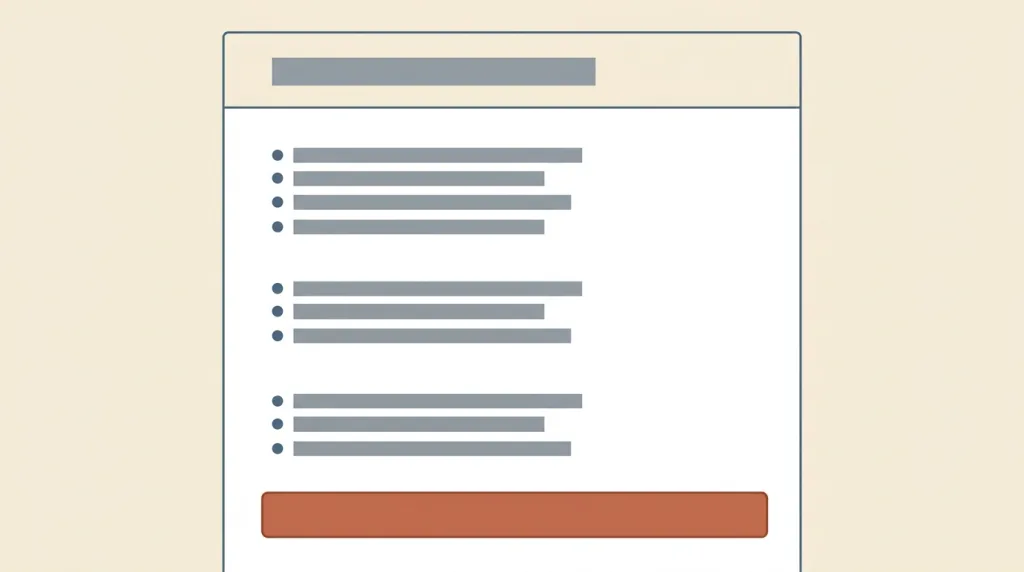
A single explanatory page before the formal flow begins: what the service does, whether it applies to you, what you need to have ready, roughly how long it takes, and whether it costs anything — ending in one "start" entry point.
Recognizing it
- One sentence says what the service does
- Eligibility, required material, time, and cost are stated explicitly
- The page has one primary entry point, usually a start button
Concept boundary
A start page is not a landing page: a landing page persuades a visitor to choose the product, while a start page assumes the decision is made and only helps people judge whether they qualify and are prepared. It is not the first step of the flow either — nothing is being filled in yet, so no form fields belong on it. Its job is to stop people discovering halfway through that they are missing something, so the conditions on it must be true and complete; holding back a key restriction until mid-flow pushes the cost onto the user.
When to consider it
- The flow is long or needs material prepared in advance, so dropping out midway is costly
- Not everyone qualifies and the basis for judging has to come first
- The service is reached from several places and needs one shared explanatory page
When to be cautious
- The flow is one or two steps and can be abandoned freely, where an extra page only slows things down
- Marketing copy is packed into the start page, obscuring the real conditions and costs
- The listed conditions are incomplete and a key restriction only appears mid-flow
Tradeoff
Stating the conditions up front reduces mid-flow abandonment and wrong submissions, at the cost of one extra page for everyone — and the longer it gets, the more readily people who already know the flow skip past it.
Conditional rules · Editorial advice
Related entries
The start page sets out the premises and preparation while the wizard breaks the filling-in into steps; they sit back to back with no overlap in responsibility.
A landing page addresses undecided visitors and a start page addresses people who have decided; merging them lets a marketing tone dilute the conditions.
The whole point of a start page is to surface costs early; deferring them turns it into hidden costs.
Sources and what they support
The pattern states that a service’s start point should "give the user just enough information to help them understand what the service does and whether it will meet their need", and requires public services to start from a GOV.UK content page so they can be found through search and navigation. This entry paraphrases the content checklist from it; the remaining trade-offs are editorial.
Retrieved: 2026-09-16Definitions reference these sources. Digital specimens, selection advice, relationships, and recipes are editorial work and have not been validated through user research.
Type extensions and implementation notes
This entry has no runnable specimen; the illustration is an editorial sketch of how the page divides its content, not a verified implementation. Before shipping, confirm that the conditions, fees, and durations listed match what the flow actually requires.
{
  "states": [
    "idle",
    "started"
  ],
  "a11y": [
    "The start control is a link or button whose name says what it starts",
    "Conditions and required material use real list markup so screen readers can step through them"
  ],
  "motion": "No motion"
}
Full Agent entry JSON
{
  "id": "start-page",
  "type": "layout",
  "name": {
    "zh": "开始页",
    "en": "Start Page"
  },
  "aliases": [
    "Start Point",
    "Service Start Page",
    "服务起始页",
    "开始使用页"
  ],
  "granularity": "page",
  "intents": [
    "organize-content",
    "reduce-complexity"
  ],
  "tags": [
    "service entry",
    "eligibility",
    "what you need",
    "public service",
    "start button"
  ],
  "definition": "A single explanatory page before the formal flow begins: what the service does, whether it applies to you, what you need to have ready, roughly how long it takes, and whether it costs anything — ending in one \"start\" entry point.",
  "boundary": "A start page is not a landing page: a landing page persuades a visitor to choose the product, while a start page assumes the decision is made and only helps people judge whether they qualify and are prepared. It is not the first step of the flow either — nothing is being filled in yet, so no form fields belong on it. Its job is to stop people discovering halfway through that they are missing something, so the conditions on it must be true and complete; holding back a key restriction until mid-flow pushes the cost onto the user.",
  "signature": [
    "One sentence says what the service does",
    "Eligibility, required material, time, and cost are stated explicitly",
    "The page has one primary entry point, usually a start button"
  ],
  "when": [
    "The flow is long or needs material prepared in advance, so dropping out midway is costly",
    "Not everyone qualifies and the basis for judging has to come first",
    "The service is reached from several places and needs one shared explanatory page"
  ],
  "when_not": [
    "The flow is one or two steps and can be abandoned freely, where an extra page only slows things down",
    "Marketing copy is packed into the start page, obscuring the real conditions and costs",
    "The listed conditions are incomplete and a key restriction only appears mid-flow"
  ],
  "tradeoff": "Stating the conditions up front reduces mid-flow abandonment and wrong submissions, at the cost of one extra page for everyone — and the longer it gets, the more readily people who already know the flow skip past it.",
  "comparison": {
    "focus": "Letting people judge before starting whether they qualify and are ready",
    "mechanism": "One page of explanation plus a single start entry point, with no form fields",
    "cost": "Everyone passes through one extra page"
  },
  "sources": [
    {
      "id": "start-govuk",
      "title": "GOV.UK Design System · Start using a service",
      "url": "https://design-system.service.gov.uk/patterns/start-using-a-service/",
      "claim": "The pattern states that a service’s start point should \"give the user just enough information to help them understand what the service does and whether it will meet their need\", and requires public services to start from a GOV.UK content page so they can be found through search and navigation. This entry paraphrases the content checklist from it; the remaining trade-offs are editorial.",
      "checkedAt": "2026-09-16",
      "archive": {
        "lookupUrl": "https://web.archive.org/web/20260916*/https://design-system.service.gov.uk/patterns/start-using-a-service/",
        "status": "available",
        "checkedAt": "2026-09-16T13:25:34.531Z",
        "jobId": "spn2-48f93b0a3d733d60133d014ef13a0ae0373ebca4",
        "url": "https://web.archive.org/web/20260916132652/https://design-system.service.gov.uk/patterns/start-using-a-service/",
        "timestamp": "20260916132652"
      }
    }
  ],
  "relations": [
    {
      "target": "wizard",
      "kind": "composes_with",
      "condition": "A step-by-step flow follows the start page",
      "reason": "The start page sets out the premises and preparation while the wizard breaks the filling-in into steps; they sit back to back with no overlap in responsibility.",
      "basis": "editorial"
    },
    {
      "target": "landing-page",
      "kind": "alternative",
      "condition": "Deciding whether this page is for persuading or for preparing",
      "reason": "A landing page addresses undecided visitors and a start page addresses people who have decided; merging them lets a marketing tone dilute the conditions.",
      "basis": "editorial"
    },
    {
      "target": "hidden-costs",
      "kind": "conflicts_when",
      "condition": "Fees or required material are left off the start page and only surface late in the flow",
      "reason": "The whole point of a start page is to surface costs early; deferring them turns it into hidden costs.",
      "basis": "editorial"
    }
  ],
  "rules": [
    {
      "when": "The service has eligibility conditions, fees, or deadlines",
      "instruction": "List them in full on the start page, including who does not qualify and what they can do instead, rather than only the qualifying case.",
      "strength": "must",
      "basis": "editorial"
    },
    {
      "when": "Users may enter the flow directly from a search result or an external link",
      "instruction": "Let the first step link back to the start page, and treat that page as the service’s canonical entry point.",
      "strength": "recommend",
      "basis": "editorial"
    }
  ],
  "behavior": {
    "states": [
      "idle",
      "started"
    ],
    "a11y": [
      "The start control is a link or button whose name says what it starts",
      "Conditions and required material use real list markup so screen readers can step through them"
    ],
    "motion": "No motion"
  },
  "demo": null,
  "version": "0.1.0",
  "editorialStatus": "drafted",
  "requirements": [],
  "demoCapabilities": [],
  "implementationNote": "This entry has no runnable specimen; the illustration is an editorial sketch of how the page divides its content, not a verified implementation. Before shipping, confirm that the conditions, fees, and durations listed match what the flow actually requires.",
  "image": {
    "src": "/images/start-page.webp",
    "alt": "A fictional FIELDNOTES service explanation page sketch: a grey placeholder headline bar at the top, three bulleted groups of placeholder bars below it for what the service does, who it applies to, and what to prepare, and a single primary button at the bottom."
  },
  "searchTerms": [
    "服务入口",
    "适用条件",
    "准备材料",
    "政务",
    "开始按钮"
  ]
}